1. Why can toy robots walk?
Toy robots can walk, Like the Intelligent Voice Dialogue Robot, the Intelligent voice-controlled Police Robot, the Intelligent Voice Robot, the intelligent Voice robot, these kinds of toy robots can walk, It relies on a range of technologies and design principles, including mechanical structures, motors, sensors and control systems. Here are some key factors:
Mechanical structure: joint design. Toy robots usually have multiple joints, such as knee, hip, and ankle joints. These joints can move flexibly, mimicking human or animal gait; Connecting rod mechanism. Some robots use a linkage mechanism that converts the rotating motion of the motor into linear or complex joint motion.
Motor: servo motor and stepper motor. Servo motors and stepper motors are often used to drive the joints of robots. These motors can precisely control the rotation Angle and speed, so that the robot can perform precise gait control; Dc motor. Dc motors are usually used to drive wheels or tracks and are suitable for rolling or tracked robots.
Sensors: gyroscope and accelerometer, these sensors are used to detect the posture and motion of the robot, the accelerometer can sense the tilt and acceleration of the robot, the gyroscope can sense the rotation Angle and speed; Tactile sensors, which help robots sense the ground and adjust their gait to maintain balance.
Control systems: microcontrollers and microcontrollers. These control systems are used to receive sensor data, calculate gait patterns, and control motor movements; Feedback control, through which the robot can adjust its actions in real time to respond to changes in the ground and maintain balance. For example, when the robot senses a tilt, it can adjust the Angle of the joint to restore balance.
Gait algorithm: pre-defined gait mode, some robots adopt pre-programmed gait mode to control the motion order and Angle of each joint to achieve walking, adaptive gait control, advanced robots can adjust their gait in real time according to sensor data to adapt to different terrain and environment.
Energy supply: Most toy robots are powered by rechargeable batteries that provide continuous electrical energy to drive the electric motors and control systems.
2. Why can robots toy talk?
Toy robots can talk, such as Intelligent Voice Dialogue Robot, Intelligent Voice Robot, Smart Naughty Voice Dog and other intelligent machine toys, mainly rely on the combination of multiple key technologies and components, The toy robot can generate and output natural speech to achieve interaction and communication with users. This not only increases the fun and playability of the toy robot, but also provides users with a richer and more realistic experience.
Speech synthesis technology: Text-to-Speech (TTS), which is the core technology of toy robot speech. TTS technology can convert text into natural speech output. With pre-stored vocabulary and grammar rules, TTS systems can generate fluent speech. Pre-recording, some toy robots use pre-recorded speech clips and play these clips as needed to achieve speech functions.
Audio hardware: speakers, built-in speakers in toy robots for output of synthesized or recorded speech. The quality of the speaker directly affects the clarity and volume of the speech; Audio processing chip, processing and output audio signals, to ensure the quality and synchronization of speech.
Speech database: Vocabulary and speech clips, toy robots usually have a built-in vocabulary and speech clips library for generating and playing speech. These libraries can contain common words, phrases, and specific responses; Custom speech, some advanced toy robots allow users to customize speech, record their own voice or download new speech packages.
Control systems: microcontrollers and single-chip computers. These control systems manage the speech synthesis and playback process, receive input from the user and trigger corresponding speech outputs. Algorithms and software, speech synthesis algorithms and software control the logic of speech generation, ensuring that the speech output fits the context and context.
Speech recognition and response: speech recognition technology, some advanced toy robots have voice recognition function, can understand the user's voice command, and generate the corresponding voice reply according to the command; Natural Language processing (NLP) : NLP technology helps robots understand the user's speech content, perform semantic analysis, and generate more intelligent and natural speech responses.
Interaction design: dialogue logic, preset dialogue logic and scene, to ensure that the robot can make reasonable voice response according to different user input; Emotional expression, through changes in voice intonation, volume and speed, the toy robot can simulate emotional expression and make the conversation more vivid.
Networking functions: online speech synthesis. Some toy robots use advanced speech synthesis services in the cloud through networking functions to achieve more natural and complex speech output; Content update: Through the network connection, the toy robot can regularly update the voice database and dialogue logic, keeping the content fresh and diverse.
3. Why can robot toys talk?
Robot toys can talk, such as Intelligent Voice Dialogue Robot, Intelligent Voice Robot, Smart Naughty Voice Dog and other intelligent machine toys, mainly rely on the combination of multiple key technologies and components, The robot toy can generate and output natural speech to achieve interaction and communication with users. This not only increases the fun and playability of robot toys, but also provides users with a richer and more realistic experience.
Speech synthesis technology: Text-to-Speech (TTS), which is the core technology of robot toy speech. TTS technology can convert text into natural speech output. With pre-stored vocabulary and grammar rules, TTS systems can generate fluent speech. Pre-recording, some robot toys use pre-recorded speech clips, which are played as needed to achieve speech functions.
Audio hardware: speakers, built-in speakers in robot toys for output of synthesized or recorded speech. The quality of the speaker directly affects the clarity and volume of the speech; Audio processing chip, processing and output audio signals, to ensure the quality and synchronization of speech.
Speech Database: Vocabulary and speech clip library, robot toys usually have a vocabulary and speech clip library built in for generating and playing speech. These libraries can contain common words, phrases, and specific responses; Custom speech, some advanced robot toys allow users to customize speech, record their own voice or download new speech packages.
Control systems: microcontrollers and single-chip computers. These control systems manage the speech synthesis and playback process, receive input from the user and trigger corresponding speech outputs. Algorithms and software, speech synthesis algorithms and software control the logic of speech generation, ensuring that the speech output fits the context and context.
Speech recognition and response: speech recognition technology, some advanced robot toys have voice recognition function, can understand the user's voice command, and generate the corresponding voice reply according to the command; Natural Language processing (NLP) : NLP technology helps robots understand the user's speech content, perform semantic analysis, and generate more intelligent and natural speech responses.
Interaction design: dialogue logic, preset dialogue logic and scene, to ensure that the robot can make reasonable voice response according to different user input; Emotional expression, through changes in voice intonation, volume and speed of speech, robot toys can simulate emotional expression and make dialogue more vivid.
Networking functions: online speech synthesis, some robot toys through the networking function, the use of cloud advanced speech synthesis services, to achieve more natural and complex voice output; Content update: Through the network connection, the robot toy can regularly update the voice database and dialogue logic, keeping the content fresh and diverse.
4. Why can robot toys sing?
Robot toys can sing, such as Smart Pet Robotic Cat, Intelligent Remote Control Robot Dog and other intelligent machine toys, mainly rely on the combination of the following key technologies and components, so that robot toys can generate and play natural songs. Achieve singing function. This not only increases the entertainment of robot toys, but also provides users with a richer and more diverse interactive experience.
Singing Synthesis: An application of speech synthesis technology that converts text and melody into singing sounds. Common technologies include Vocaloid, which synthesizes natural and emotional songs; Pre-recorded audio, some robot toys use pre-recorded song audio files and play these audio as needed to achieve singing functions.
Audio hardware: Speakers: The robot toy has built-in speakers for the output of synthesized or recorded singing. The quality of the speaker directly affects the clarity and sound quality of the audio; Audio processing chip: processing and output audio signals to ensure the quality and synchronization of singing.
Music database: song library, robot toys usually have a built-in song library containing multiple pre-recorded or synthesized songs that the user can choose to play; Melody and lyrics library, some advanced robot toys can synthesize new songs through the built-in melody and lyrics library.
Control systems: microcontrollers and microcontrollers. These control systems manage the song playing process, receive user input and trigger the appropriate song. Algorithms and software; Song composition and playback algorithms, as well as the logic and flow that control singing.
tone and rhythm control: tone synthesis. Robot toys can realize singing with different pitch and timbre by controlling the tone synthesis module; Rhythm control, by controlling the rhythm module, the robot can accurately sing in accordance with the preset rhythm.
Interactive design: user selection and control, designed a simple and easy-to-use interface, users can choose songs, adjust the volume and tone, etc. Synchronous display, some robot toys are equipped with a display that can synchronously display lyrics to enhance the interactive experience.
Networking function: online content update, through the networking function, robot toys can download new songs and update singing content, to keep the content fresh and diversified; Streaming, advanced robot toys can play online music and songs directly through the Internet.
Emotion expression: voice and intonation control, by controlling the intonation, volume and rhythm of singing, robot toys can simulate emotion expression and make singing more vivid; Expressions and movements: Some robot toys will synchronously make expressions and movements when singing, enhancing the fun and interactive performance.
5. Why do robot toys dance?
We often see our children's robot friends jumping and dancing, Whether it's Intelligent Voice-controlled Police Robot, Intelligent Voice Robot, Intelligent Voice Dialogue Robot, etc. Or Smart Naughty Voice Dog, Smart Stunt Dog, Intelligent Remote Control Robot Dog, Smart Pet Robotic Cat and other robot pets can dance, what is the reason? What's the technology behind this? In fact, this is mainly because these toys use a lot of intelligent advanced technology, the combination of these technologies and components, so that robot toys can achieve complex and coordinated dance movements, to provide users with entertainment and interactive experience.
Mechanical structure: multi-joint design, robot toys usually have multiple joints (such as shoulder, elbow, hip and knee), the flexibility of these joints enables the robot to carry out complex movements; Balanced design, through a carefully designed center of gravity and mechanical structure, the robot is able to maintain its balance while dancing and will not fall easily.
Motors and servo systems: servo motors, which can precisely control the Angle and speed of the joints, so that the robot can perform smooth and coordinated dance movements. Stepper motors are also commonly used in the motion control of robot joints to provide precise position control and stable motion.
Motion control system: Motion algorithm, through the pre-programmed motion algorithm, the robot can perform a series of dance movements. These algorithms control the motion sequence, Angle and speed of each joint to generate continuous dance movements. Path planning: Advanced motion control systems enable path planning to ensure that the robot does not collide with obstacles while dancing and is able to move flexibly in limited Spaces.
Sensors: gyroscope and accelerometer, these sensors are used to detect the posture and motion of the robot, the accelerometer can sense the acceleration and tilt of the robot, the gyroscope can sense the rotation Angle and speed, to help the robot maintain balance and stability when dancing; Some robots are equipped with tactile sensors that can sense changes and feedback information on the ground and adjust dance movements to adapt to different ground conditions.
Music and rhythm synchronization: audio playback, the built-in speaker of the robot can play music, the robot can synchronize with the rhythm of music through the control system and motion algorithm, and carry out coordinated dance movements; Rhythm analysis: Advanced robotic toys are able to analyze the rhythm and beat of the music and adjust the dance movements according to the rhythm of the music to make the movements more coordinated and expressive.
programming and pre-programmed movements: pre-programmed movement library. Many robot toys have built-in pre-programmed dance movement library. Users can choose different dance modes, and the robot will perform according to the pre-programmed movement sequence; User programming: Some robot toys allow users to create unique dance performances by customizing dance moves and sequences through a programming interface.
Vision and environment awareness: Cameras and vision sensors, advanced robots are equipped with cameras and vision sensors that can identify objects and obstacles in the environment and make dynamic adjustments to ensure smooth and safe dance movements. Environmental awareness, by sensing the surrounding environment, robots can interact with other robots or humans to perform collaborative dance performances.
Networking and collaboration: Wirelessly connected, via Wi-Fi or Bluetooth, robots can sync with other devices for collaborative dance performances, or access new dance moves and music from the cloud. Group coordination: Multiple robots can coordinate via a wireless connection to synchronise complex group dance performances.
6. Why can robot toys understand people?
Robot toys can understand human speech, just like The Smart Cop Robot, Intelligent Voice Dialogue Robot and other robot toys, can complete relevant actions according to human instructions, mainly rely on key technologies and components, the combination of these technologies and components, The robot toy can accurately capture, identify and understand the user's voice command, so as to achieve intelligent voice interaction function. This not only enhances the entertainment and playability of robot toys, but also provides users with a more rich and natural experience.
Speech Recognition technology: Automatic Speech Recognition (ASR) technology can convert human speech into text. The ASR system built into the robot toy analyzes the features in the speech signal to recognize what the user says and convert it into a text format that can be processed.
Microphone and audio processing: Microphone array, robot toys are usually equipped with one or more microphones for capturing the user's voice signal. Microphone arrays can improve the clarity and directivity of voice capture and reduce interference from background noise. Audio processing chip, the audio processing chip is used to pre-process the captured speech signal, such as noise reduction, echo cancellation and signal enhancement, to improve the accuracy of speech recognition.
Natural Language Processing (NLP) : Semantic understanding, NLP technology is used to analyze and understand the user's speech content. Through semantic analysis, the robot is able to understand the user's intent and context and make reasonable responses. Dialogue management: The NLP system includes a dialogue management module that can handle multiple rounds of conversations, maintain context, and have natural interactions.
Speech database and model training: Speech database, ASR and NLP systems require a large amount of speech data and text data for training. The speech database contains various speech samples, which are used to train recognition and understanding models and improve the recognition accuracy of the system. Machine Learning models, through deep learning and other machine learning techniques, develop and optimize speech recognition and natural language processing models so that they can accurately understand and process human language.
Artificial intelligence and adaptive learning: adaptive learning, some robot toys have adaptive learning ability, can constantly adjust and optimize their own speech recognition and understanding model according to the user's voice and interaction records, and improve performance. AI algorithms can help robots reason and make decisions in uncertain or ambiguous situations, providing a more intelligent and flexible interactive experience.
Edge computing and cloud computing: Edge computing, some robot toys put voice recognition and processing tasks on local devices, reducing dependence on network connections, improving response speed and data privacy. Using the powerful computing power of the cloud, robots can access more complex and high-performance speech recognition and NLP services, achieving greater accuracy and diverse functionality.
Networking features and data updates: Networking features, through Wi-Fi or Bluetooth connection, robot toys can access online speech recognition and NLP services for more complex and high-performance speech processing; Real-time updates, the networking function enables the robot to update the speech database and processing model in real time, keeping the latest language features and usage habits.
Interaction design: User interface and feedback, design friendly user interface and real-time feedback mechanism to let users know whether the robot has correctly understood their instructions, and enhance interactive experience; Multi-modal interaction, combined with a variety of senses such as speech, vision and touch, provides a more natural and rich interactive experience.
6. Why do robot toys think?
Robot toys can "think", mainly through advanced artificial intelligence technology and computing power to achieve. Although this "thinking" is not really human thinking, it can simulate certain thought processes and thus make intelligent responses. Here are some of the key factors that make robotic toys capable of "thinking" :
Artificial Intelligence (AI) algorithms: Machine learning, through which robots can learn patterns and rules from data. Supervised learning, unsupervised learning and reinforcement learning are common machine learning methods. Deep learning, deep neural networks (DNNS) are capable of processing complex non-linear data, enabling robots to excel in tasks such as image recognition, speech recognition, and natural language processing.
Natural Language Processing (NLP) : Semantic understanding, NLP technology can analyze and understand the user's language input, extract semantic information, and generate reasonable responses accordingly; Dialogue management, through the dialogue management system, the robot can handle multiple rounds of dialogue, maintain context, and have continuous and natural interaction.
Decision system, rule engine, based on predefined rules and logic, the robot can make corresponding decisions on the input; Inference engines, using logical reasoning and knowledge graphs, robots are capable of complex reasoning, simulating some degree of "thinking" process.
Sensors and environmental perception: multi-modal sensors, through cameras, microphones, tactile sensors, etc., the robot can perceive the surrounding environment and obtain external information; Data fusion combines data from different sensors to form a comprehensive understanding of the environment from which decisions can be made.
Edge computing and cloud computing: Edge computing, real-time data processing and decision-making on local devices, improving response speed and privacy protection. Cloud computing, using the cloud's powerful computing power and data storage, to achieve complex AI algorithms and large-scale data analysis.
Learning and adaptation: Adaptive learning, by constantly learning the user's behavior and preferences, the robot can adjust its own behavior, improve the personalized and intelligent level of interaction; Model updates, AI models and databases are regularly updated to keep knowledge and capabilities up to date.
Interaction design: user interface and feedback mechanism, design friendly user interface and real-time feedback mechanism, so that users can feel the intelligence and interaction of the robot; Emotional computing: By analyzing the user's voice tone, facial expression and behavior, the robot can sense the user's emotions and make corresponding emotional responses.
Simulation of thinking process: Problem solving. By decomposing problems, searching solutions and evaluating results, robots can simulate a certain degree of thinking and problem solving process; Planning and execution: Robots can make plans and execute those plans step by step, flexibly responding to environmental changes and user needs.
The combination of these technologies and components allows robotic toys to simulate a certain level of "thinking" process to make intelligent decisions and responses. Although this "thinking" is fundamentally different from the human thought process, it can achieve intelligent interaction and autonomous behavior to a certain extent, improving user experience and satisfaction.
7. Why does the robot toy answer?
Robot toys can answer questions. Intelligent Voice Dialogue Robot, Intelligent Voice Robot and other intelligent voice robots can answer some questions raised by people, mainly relying on the following key technologies and components:
Speech Recognition (ASR) : Automatic speech recognition technology: ASR technology can convert the user's speech input into text. The robot captures the user's speech through a microphone and then uses an ASR algorithm to convert it into a text message that can be processed.
Natural Language Processing (NLP) : Text understanding, using NLP technology to analyze and understand the converted text content, identify the user's intent and the type of question. NLP includes lexical analysis, syntax analysis, semantic analysis and context understanding. Dialogue management: The dialogue management system is responsible for maintaining the context of the conversation, ensuring that the robot can maintain coherent and relevant answers across multiple rounds of dialogue.
Knowledge base and database: Predefined knowledge base, the robot has built in a huge knowledge base, containing common questions and their answers. This knowledge base can be continuously updated and expanded through programming or machine learning models; Dynamic database access, some advanced robots can access online databases or cloud resources to obtain the latest information and knowledge.
Artificial Intelligence and machine learning: Deep learning models, using which robots trained can better understand complex language structures and semantics to provide more accurate and relevant answers; Reinforcement learning, by constantly interacting with users, robots can learn users' preferences and common questions, improving the accuracy and quality of their answers.
Speech Synthesis (TTS) : text-to-speech synthesis technology, TTS technology converts the generated text responses into natural speech output. Through the high-quality TTS system, the robot is able to provide answers to the user in a smooth and natural voice.
Feedback and self-improvement: User feedback. By collecting user feedback information, the robot can adjust and optimize its answer strategy and improve interactive experience; In adaptive learning, the robot is able to adjust its algorithms and knowledge base based on the user's behavior and feedback, constantly improving the accuracy and relevance of the answers.
Emotional computing: Emotional recognition. By analyzing the user's voice intonation, facial expression and body language, the robot can perceive the user's emotions and adjust the content and tone of the answer according to the emotions; Emotional expression: When answering questions, the robot can express emotions through changes in voice intonation, making the interaction more vivid and natural.
Networking and real-time updates: Networking functions, through Wi-Fi or other wireless connections, the robot can access online resources and databases in real time, providing the latest information and answers; With automatic updates, the robot can regularly update its knowledge base and software, ensuring that its information and features stay up to date.
Dialogue system design: preset dialogue templates for common questions and scenarios to improve the efficiency and accuracy of answers; Custom answers, some bots allow users to customize answers to suit specific usage scenarios and needs.
Through the combination of these technologies and components, the robot toy is able to accurately capture and understand the user's questions and generate corresponding responses. This not only makes the interaction more interesting and intelligent, but also provides users with a richer and more natural experience.
8. Why do robot toys turn?
Robot toys are capable of turning and rely on several key technologies and components:
Mechanical structure design: independent driving wheel, many robot toys are equipped with independent driving left and right wheels, by controlling the speed and direction of each wheel to achieve turning. If the left and right wheels have different speeds, the robot turns. Omnidirectional wheels, some robots use omnidirectional wheels (universal wheels), which can achieve more flexible movement, including rotation in place and oblique movement.
Motor and servo system: servo motor, servo motor can accurately control the speed and direction of the wheel, by adjusting the parameters of the servo motor, to achieve accurate turning; Stepper motor, stepper motor by gradually adjusting the rotation Angle, to achieve accurate control of wheel movement.
Sensors and environmental awareness: gyroscopes and accelerometers, which help the robot detect its own rotation and acceleration to ensure balance and stability during turning; Distance sensors and infrared sensors: These sensors are used to detect surrounding obstacles and help the robot avoid collisions when turning.
Control system: microcontroller and single-chip microcomputer, these control systems receive sensor data, calculate the parameters required for turning, and control the movement of the motor; PID (proportional-integral-differential) control algorithm is used to adjust the speed and direction of the motor to ensure smooth and accurate turning.
Navigation system: path planning algorithm, which helps the robot determine the timing and Angle of turning, avoid obstacles and reach the target position; Real-time correction, the advanced navigation system can correct the position and direction of the robot in real time, ensuring flexible movement in complex environments.
Motion control software: motion instruction set, the robot presets a set of motion instructions, including forward, backward, left and right turn, etc., by combining these instructions to achieve complex movements; Programming interfaces, some robots provide user programming interfaces that allow users to write custom turning and motion control programs.
Feedback system: position feedback, obtain the position data of wheels and joints through the position sensor, adjust the motion parameters in real time, and ensure the accuracy of turning; Speed feedback, the speed sensor monitors the actual speed of the wheel, compares it with a preset value, and adjusts it via a feedback control system.
Intelligent algorithms: Machine learning and artificial intelligence: Some advanced robots use machine learning and AI algorithms to optimize turning strategies according to environmental changes and historical data, improving the intelligence and adaptability of movement.
User control: remote control and wireless control, the user can control the turning direction and Angle of the robot through the remote control or smart phone application to achieve remote operation; Voice control, some robots support voice commands, and the user can tell the robot to turn by voice command.
The combination of these technologies and components allows robotic toys to flexibly perform turning movements to perform complex tasks and actions in a variety of environments. This not only improves the playability and interactivity of the robot, but also provides a rich user experience.
9. Why do robot toys spray?
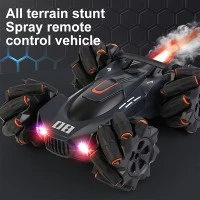
Robot toys can Spray, such as Spray Cop Robot, The Smart Cop Robot, these intelligent Cop robots can spray water mist, which is very cool. They can make these stunts, mainly rely on the following key technologies and components:
Spray device: sprayer, a small sprayer built into the robot, similar to the atomizer or nozzle, which can convert the liquid into fine aerosol particles. Common types of nebulizers include ultrasonic nebulizers and mechanical nozzles; Liquid storage container, there is a small liquid storage container inside the robot for storing the liquid that needs to be ejected. The liquid can be water, perfume, or other solution suitable for spraying.
Pumps and pressure systems: miniature pumps, the pump system is responsible for extracting the liquid from the storage container and spraying it through the nozzle. Micro-pumps can be electric pumps, air pumps or other types of small pumps; Pressure regulation, by controlling the pressure of the pump, adjust the strength and range of the spray to ensure the stability of the atomization effect and spray volume.
Control system: microcontroller and electronic circuit, microcontroller is responsible for managing the work of the spray device, including starting and stopping the spray, adjusting the spray intensity, etc. The electronic circuit controls the power supply and working state of the pump; Timers and sensors, timers can set the frequency and duration of the spray, sensors can detect environmental conditions (e.g. humidity, temperature) to optimize the spray effect.
User interface and control: buttons and switches, the robot may be equipped with buttons or switches, the user can manually control the opening and closing of the spray function, remote control, some advanced robot toys can be remotely controlled by remote control or smart phone application, the user can enable the spray function anytime and anywhere.
Automation and intelligence: automatic mode, some robots have designed automatic spray mode, which can automatically spray according to preset procedures or environmental conditions; Intelligent sensing, through infrared sensors, distance sensors, etc., the robot can detect nearby objects or people, and spray at the right time.
Power system: Battery powered, most robot toys use battery powered, to ensure the normal operation of the spray device. An efficient power management system can extend the use time of the spray function; Charging interface: Some robots are equipped with charging interface to facilitate the user to charge when the battery is exhausted.
Safety design: leak-proof design to ensure the tightness of liquid storage containers and spray systems to prevent liquid leakage; Safety switch, designed safety switch, when necessary, can emergency shut down the spray function, to prevent misoperation or unnecessary spray.
The combination of these technologies and components enables the robot toy to achieve the spray function. The spray function can be used for a variety of purposes, such as simulating the steam of a locomotive, adding interest and interactivity, giving off aromas or humidifying air. With careful design and technical integration, robotic toys can provide a fun and practical spray experience in a variety of scenarios.
10. Why do robot toys fire?
Robot toys can "fire" or simulate The action of firing, like robots such as Intelligent Voice-controlled Police Robot and The Smart Cop Robot, they can fire weapons, relying on several key technologies and components:
Launch mechanism: ejection device, many robot toys are equipped with ejection device, can launch small darts, foam bullets, plastic balls and so on. Common ejection devices include spring launcher, compressed air launcher and electric launcher; LED lights and sound effects: To simulate the firing effect, some robots are equipped with LED lights and speakers. At launch, LED lights will flash and speakers will sound like gunshots, adding realism.
Electric motor and servo system: electric motor, electric motor drive the launch device, control the launch force and speed; The servo system precisely controls the direction and Angle of the launch to ensure the accuracy and controllability of the launch.
Control system: microcontroller and single chip microcomputer, microcontroller is responsible for managing the entire launch process, including receiving user commands, controlling the start and stop of the launcher, coordinating LED lights and sound effects; Remote control and wireless control, many robot toys can be controlled by remote control or smartphone app, the user can remotely trigger the firing action.
Sensor: distance sensor, some advanced robot toys are equipped with distance sensor, can detect the position and distance of the target, automatically aim and launch; Infrared sensors, used to detect obstacles and targets, help the robot to automatically aim and fire.
User interface and interaction: button and touch control, the robot body usually has a button or touch control area, the user can directly press the button to trigger the firing action; Voice control, some advanced robots support voice commands, and users can tell the robot to fire through voice commands.
Safety design: To limit the launch force, in order to ensure safety, robot toys are usually designed with appropriate launch force to ensure that it will not cause harm to people or things; Some robots are equipped with protection mechanisms, such as preventing false triggering and automatic shutdown functions, to ensure safety during use.
Energy storage and management: Battery powered, robots usually use batteries to provide a stable source of energy. An efficient power management system can extend service time and ensure the normal operation of the launcher; Charging interface, some robots are equipped with charging interface, convenient for users to charge when the battery is exhausted.
Simulation and entertainment effects: sound effect simulation, through the built-in speaker, the robot can emit simulated gunfire, explosions and other sound effects, enhance the entertainment and realism of the firing action; Light effect simulation, LED lights and other light effect devices can produce a flash effect when fired, further increasing the visual impact.
The combination of these technologies and components enables robotic toys to simulate fire action, providing a rich interactive and entertainment experience. Whether through a physical launcher or through the simulation of light effects and sound effects, robotic toys can add fun and realism to games and entertainment.