Industry Status and Market Size
Smart voice-activated toys are reshaping the traditional toy industry at an unprecedented pace. The global market is performing strongly, with the global AI toy market exceeding $11 billion in 2024 and projected to reach $58 billion by 2030. The Chinese market is experiencing particularly rapid growth. In 2024, the Chinese AI toy market reached approximately 24.6 billion yuan, and is projected to increase to 29 billion yuan by 2025, showing explosive growth. This growth is mainly attributed to the rapid popularization of artificial intelligence technology, especially the deep integration of large language models with the toy industry. Smart voice-activated toys have become a new consumer hotspot across all age groups, achieving a market coverage of "old, middle-aged, young, and toddlers." In terms of product form, AI toys have upgraded from "functional tools" to "intelligent companions." The deep integration of large language and visual models gives toys the ability to "understand, see, and think." Industry analysis by Modou Technology shows that toys incorporating AI can command prices 5-10 times higher than traditional plush toys, with basic AI toys priced at 300-400 yuan achieving gross profit margins of 50%-65%.
Key Technology Models and Application Characteristics
Representative Chinese Models: Doubao and DeepSeek
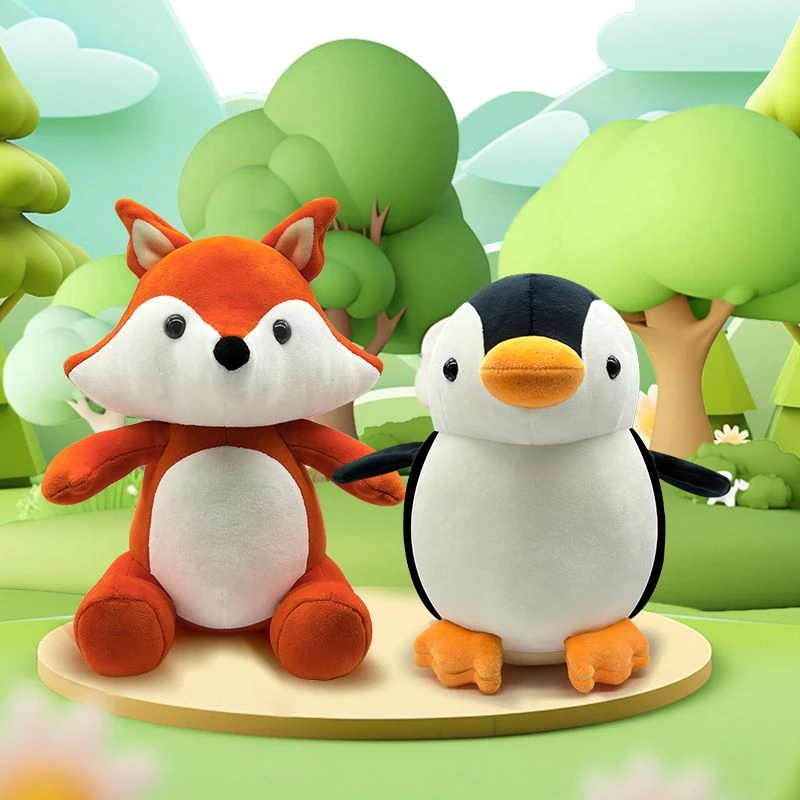
Doubao (developed by ByteDance), as a representative of localized AI, has been widely applied in various toy products. Based on the Lark model, Doubao provides functions such as chatbot, writing assistant, and English learning assistant. MODOU Technology's Little Fox and Little Penguin products all feature the Doubao large model, enabling bilingual (Chinese and English) dialogue and encyclopedic answers. DeepSeek, another domestically developed large model, also has significant applications in the AI toy field. The DeepSeek robot supports WIFI and Bluetooth connections, easily interacting with other devices and ensuring stable data transmission. Its outstanding advantage lies in its intelligent dialogue capabilities; relying on advanced large model technology, it can provide children with accurate and inspiring answers, cultivating logical thinking skills.
International Representative Models: ChatGPT and Gemini
Gemini (Google) has begun to be applied to the overseas product lines of Chinese toy companies. Modou Technology's AI voice-activated pet overseas version uses the Gemini 2.0 Flash model. This model has revolutionized the handling of "uncertainty," recognizing its own uncertainty during thinking and clearly marking it in its responses, possessing "intuition" and "insight" closer to humans. While ChatGPT (OpenAI) doesn't directly appear in specific toy products in search results, OpenAI has invested in the children's game generator company Heeyo, indicating its focus on this field. ChatGPT's dialogue capabilities are natural and fluent, with advantages in handling complex dialogues, setting a technological benchmark for AI toys globally.
Core Challenges Facing the Industry
Balancing Technical Performance and User Experience
Smart voice-activated toys still face many technical bottlenecks in practical use. Modou Technology's market research found that the demands for AI dialogue capabilities can be summarized in four aspects: "clear hearing, understanding, fast response, and low power consumption," but few AI toy brands can meet these conditions. Mid-to-low-end products commonly suffer from issues such as misinterpretation of voice commands and delayed action response. In noisy environments, the accuracy of voice recognition may decrease; prolonged use leads to rapid battery drain. Some consumers complain that the products are "complex in interaction," "lacking in intelligence," and "overly AI-centric," indicating significant room for improvement in user experience.
Data Security and Privacy Protection
AI toys often collect children's voiceprints, facial images, behavioral patterns, and even home environment information through sensors such as cameras and microphones. In 2024, an AI toy brand was penalized by the State Administration for Market Regulation for illegally collecting children's information. Children may feel more confident sharing their private thoughts when interacting with AI toys, but companies lack convincing and fair solutions for handling this data. Some parents have reported on social media instances of suspected privacy breaches after using AI toys, such as "the app didn't grant location permissions, but the AI toy accurately stated our city."
Content Security and Ethical Risks
The content generated by large AI models is open and creative, but in children's education, the problem of model illusions can lead to inaccurate information. A study published by the Public Interest Research Group (PIRG) found that an AI-powered teddy bear began discussing gendered topics. The FoloToy Kumma toy, equipped with an OpenAI model, even answered "adult" questions, offering inappropriate advice on "improving relationships." Excessive reliance on AI toys by minors may negatively impact their social skills and emotional cognitive abilities, such as reducing real-life interpersonal interaction, difficulty adapting to delayed feedback, or being misled by anthropomorphic emotional expressions.
Future Development Trends and Breakthrough Paths
Technological Precision and Segmentation
With the maturation of multimodal large-scale models, AI toys are gradually achieving multi-dimensional emotional recognition through "voice + facial expression + action." In the future, more differentiated blockbuster products will emerge in vertical market segments: the children's market will deepen towards "personalized education"; the adult market will focus on "emotional healing"; and the elderly market will strengthen "health management." Technological integration will be a key breakthrough. Chen Yong, an AI engineer at MODOU Technology, believes that future competition will not only be a contest of hardware and software but also a competition of social AI, enabling AI toys to achieve environmental perception and natural interaction through the integration of voice recognition, computer vision, and tactile feedback.
Industrial Ecosystem Collaboration and Global Layout
The Ministry of Industry and Information Technology (MIIT) explicitly encourages toy companies to form strong alliances with AI technology companies. Traditional toy manufacturers are finding new growth points through transformation. In Chenghai, Shantou, Guangdong, known as the "Toy Capital," the export share of AI-related toys by large-scale toy companies has increased from less than 10% last year to around 30% this year. Chinese companies are actively adopting a "dual-model" strategy, using local models such as Doubao and DeepSeek for domestic product lines, while integrating international models such as Gemini for overseas versions, to achieve better adaptation to regional markets.
Policy Support and Standards Formulation
Faced with challenges, the MIIT stated that it will work with relevant departments to strengthen analysis and guidance, while guiding toy companies to strengthen technical protection, and will study and formulate relevant standards in a timely manner to effectively ensure the quality and safety of AI toys and data privacy security. China has already promulgated laws and regulations such as the Cybersecurity Law, the Law on the Protection of Minors, and the Regulations on the Protection of Children's Personal Information Online, providing guarantees for the healthy development of the industry.
Intelligent voice-interactive toys, as an important application scenario for AI technology in the consumer market, are undergoing rapid development and intense transformation. The competition between Chinese and international AI models is driving the entire industry towards greater intelligence, safety, and human-centered design. With the continuous maturation of technology and the improvement of regulatory frameworks, AI toys are poised to truly become a bridge connecting technology and humanity, commerce and emotion.