In today's era of rapid technological development, STEM programming education is becoming increasingly popular. Programming robots, as a very interesting and educational tool, have entered more and more classrooms, homes and maker spaces. The motor, as a key component that makes the robot move, is like the "muscle" of the robot, and its performance directly affects the robot's movement performance. Understanding the motor knowledge used by programming robots is crucial to in-depth play with these smart helpers.
Basic knowledge of motors
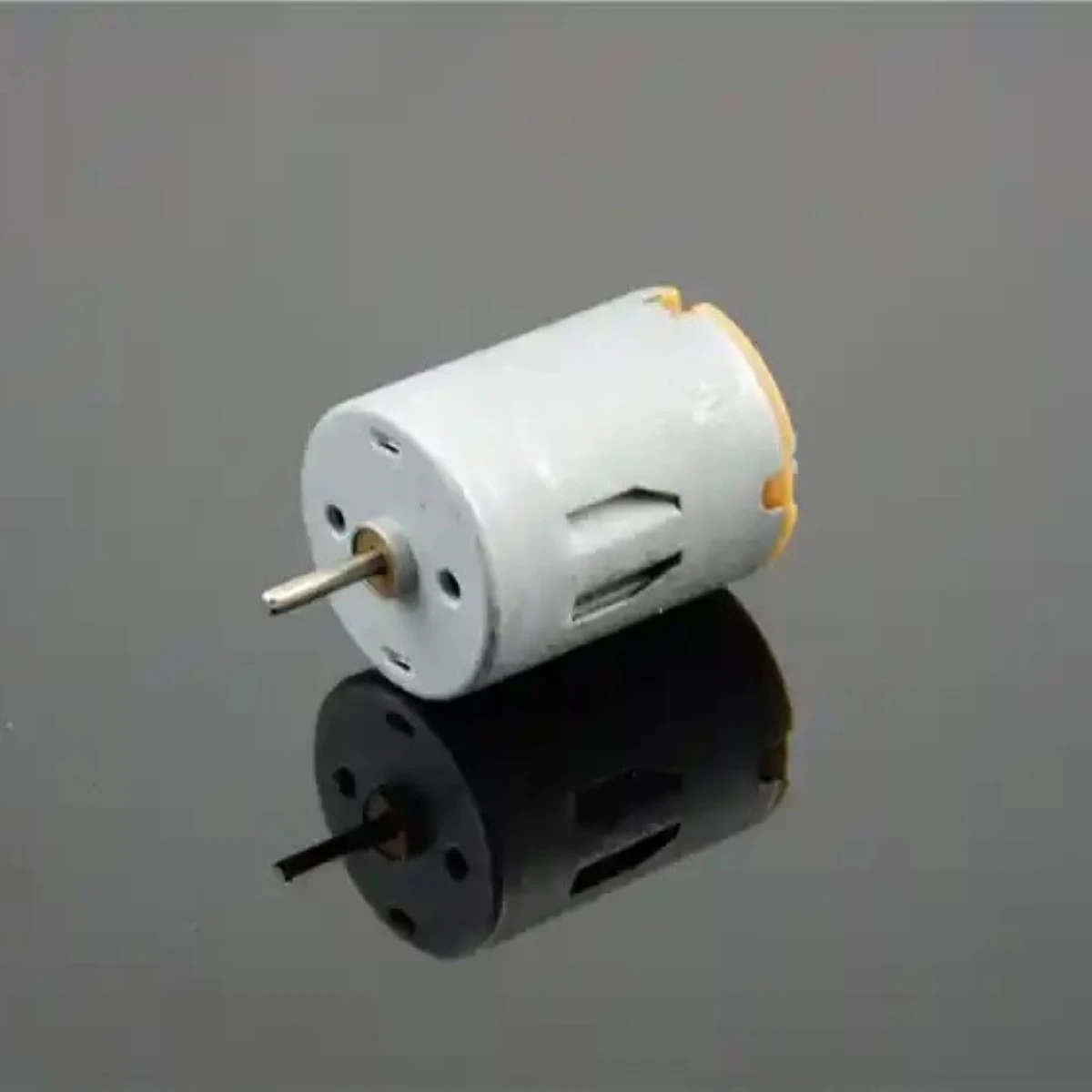
The motor, full name is an electric motor, is a device that converts electrical energy into mechanical energy based on the law of electromagnetic induction. Its basic working principle is based on the force applied to the conductor in the magnetic field. Through the cleverly designed winding and magnet structure, the magnetic field generated by the current interacts with the fixed magnetic field to drive the rotor to rotate, and then output mechanical power.
From the perspective of classification, motors are mainly divided into two categories: DC motors and AC motors. As the name suggests, a DC motor is a motor that uses direct current as a power source. It has the advantages of good speed regulation performance and large starting torque. Its speed can be flexibly adjusted by changing the voltage and other methods. It is widely used in scenarios with high requirements for precise speed control. AC motors rely on AC power to work. They have a relatively simple structure, reliable operation, and low cost. They are widely used in large-scale power equipment in the industrial field. However, their speed regulation is slightly more complex and usually requires the use of frequency conversion devices to achieve fine speed regulation.
Some key parameters of the motor determine its performance. Speed, measured in revolutions per minute (RPM), indicates how fast the motor rotates. Different application scenarios require motors with corresponding speed ranges. For example, a fast-moving robot chassis may require a high-speed motor to drive the wheels, while a slow and precise robot arm joint requires a low-speed, high-torque motor. Torque is the rotational force output by the motor, measured in Newton-meters (N m). Carrying heavy objects and overcoming mechanical friction all rely on sufficient torque. When climbing and grasping, the size of the torque is directly related to the success or failure of the task. Power, as a physical quantity that measures the speed of the motor's work (unit: watt, W), combined with speed and torque, can comprehensively reflect the motor's ability to work continuously. High-power motors can cope with high-intensity tasks, but the energy consumption is also correspondingly higher.
Common motor types for programming robots
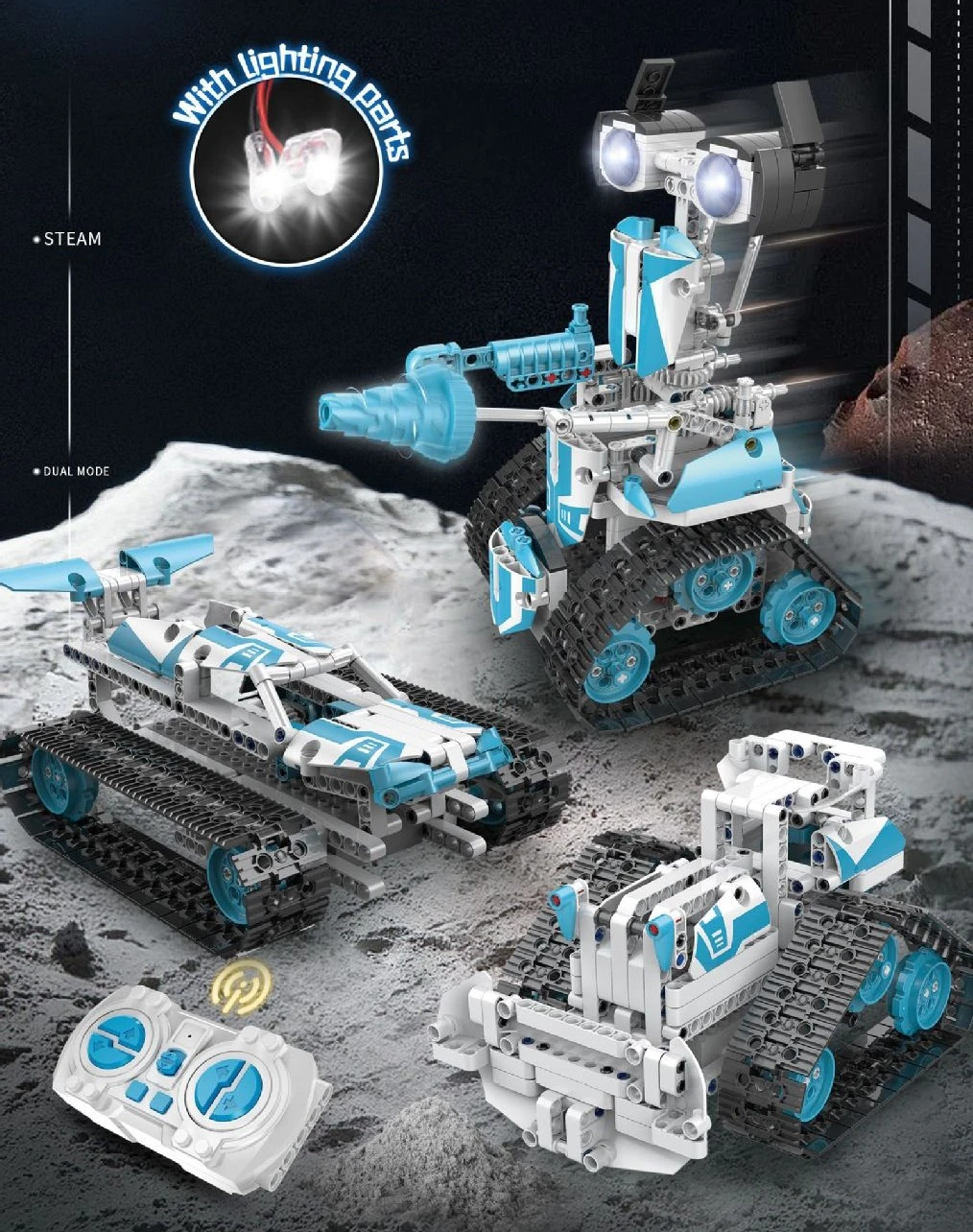
DC reduction motor: This is one of the most common "power hearts" of programming robots. It integrates a DC motor and a reduction gear set. After the high speed of the DC motor is reduced by multiple stages of gear set reduction, the speed is reduced but the torque is greatly increased. For example, in a small line patrol robot, the DC reduction motor can drive the wheels to move forward steadily at a suitable speed and accurately track the black line trajectory on the ground. Its stable low-speed operation characteristics ensure that the robot will not deviate from the route due to excessive speed. Many educational robot kits on the market, such as the 5 in 1 APP Control Programmable RC Assembly Robot Toy of Modou Technology, are often equipped with this type of motor, which is convenient for beginners to quickly build and realize simple motion functions. Students can use its relatively easy-to-control characteristics to learn programming instructions to control the robot's forward, backward, turning and other actions.
Servo: Although it is called a "machine", the servo is unique from the traditional motor in terms of working method. It consists of a closed-loop control system composed of a DC motor, a reduction gear set, a control circuit and a potentiometer. After receiving the control signal, the servo can accurately rotate to the specified angle and maintain it, and the angle control accuracy can be as high as within 1°. Servos shine in the joints of humanoid robots. For example, if you make a simple humanoid robot that can wave and kick, multiple servos control the angles of the limb joints respectively. By programming and driving different servos to rotate to specific angles in sequence, you can simulate various human movements and give the robot a vivid and flexible body language. It is often used in robot dance performances, science exhibitions, and other projects.
Brushless DC motor: As the performance requirements of robots increase, it gradually emerges. Compared with brushed DC motors, it abandons the brush structure and uses electronic commutation instead, avoiding problems such as brush wear and sparks. It has a longer life and higher efficiency, and can maintain stable performance at high speeds. In high-performance aircraft model robots, racing drones, and other equipment that pursue extreme power and lightweight, brushless DC motors are the best choice. Its strong power can quickly propel the aircraft into the air and cruise at high speed. With advanced flight control programming algorithms, it can achieve complex stunts such as tumbling and hovering in the air, meeting the needs of aviation enthusiasts to explore the sky, but its drive control circuit is relatively complete,x and the cost is also high.
How to choose a suitable motor
Based on the robot's task requirements, If you are designing a household robot for indoor flat floor cleaning, the focus is on stable, low-speed movement and a certain load capacity. The cleaning module needs to overcome the friction of the ground and bear the weight of the dust collection device. At this time, the DC reduction motor is more suitable. Its stable, low-speed torque output can ensure that the cleaning process is orderly and will not be stuck due to insufficient power when starting cleaning or turning. On the contrary, if you want to build a competitive robot that participates in a robot football match and needs to sprint quickly and turn flexibly to grab the ball, the brushless DC motor can enable the robot to respond quickly to instructions, run fast, and seize the opportunity on the field with its advantages of high speed and strong explosive power.
Consider power supply conditions: In the scenario of battery-powered portable programming robots, motor power consumption becomes a key factor. Low-power, small DC motors or energy-efficient brushless DC motors are more suitable. They can extend the robot's operating time after a single charge and avoid frequent charging, affecting the user experience. For outdoor environmental monitoring robots powered by solar panels, the motor operation must be adapted to the unstable and limited power solar input. Motors with matching power consumption and power supply should be selected to ensure that the robot can continuously complete data collection and transmission tasks without "striking" due to power exhaustion.
Matching control system: Simple Arduino starter kit robots have limited resources on the main control board. They are generally equipped with easy-to-program DC reduction motors or conventional servos. Basic PWM (pulse width modulation) pins can be used to simply achieve speed and angle control, lowering the programming threshold and facilitating novices to quickly get started. For industrial inspection robots that use high-performance embedded processors and run complex real-time operating systems, in order to give full play to the powerful computing power of the processor, brushless DC motors are combined with professional motor driver chips and complex algorithms to achieve high-precision vector control of the motor, meeting the robot's precise positioning and stable operation requirements under complex working conditions.
Conclusion
The types of motors used in STEM programming robots are diverse and have their own advantages. From basic and easy-to-use DC reduction motors, precisely positioned servos, to high-performance brushless DC motors, they inject vitality into robots in different scenarios. When choosing a motor, you need to weigh all factors such as the robot's mission characteristics, power supply limitations, and control system adaptability. Only with precise matching can the motor performance be maximized and the robot be driven to accomplish its mission. Whether it is educational enlightenment, scientific research or creative expansion, the motor, as a core component of the robot, works with programming instructions to unlock unlimited possibilities, continuously promotes the expansion of robotics technology in various fields, and inspires human enthusiasm to explore the unknown and create the future. With the iteration of technology, future motor technology innovations will surely bring more exciting chapters to programming robots.