Intelligent voice interaction technology refers to the use of technologies such as voice recognition, natural language processing, and speech synthesis to enable machines to understand human voice commands and respond accordingly. The core of this technology is to convert human language into a data format that computers can understand, and then perform specific tasks or provide information based on this data. In the past few years, with the advancement of deep learning algorithms, the accuracy of voice recognition has been significantly improved, which has greatly expanded the application scope of intelligent voice interaction technology.
At present, intelligent voice interaction technology has been widely used in many fields, such as smart homes, car systems, mobile devices and customer service. In smart homes, users can control lights, temperature and even home appliances through voice commands, greatly improving life's convenience and comfort. In car systems, drivers can use voice assistants to make calls, send text messages or query routes, thereby reducing dependence on mobile phones and improving driving safety. In addition, on mobile devices, voice assistants have become an indispensable part, helping users quickly obtain information or complete tasks.
The reason why intelligent voice interaction technology can be so widely used is mainly due to the convenience it brings. For users, voice interaction is a natural and intuitive way, without manual input, which greatly improves efficiency. At the same time, with the development of technology, the understanding ability and response speed of voice assistants are also constantly improving, making the user experience smoother. In short, intelligent voice interaction technology is gradually changing people's lifestyles and providing users with a more intelligent and personalized service experience.
Application status of intelligent voice interaction technology in toys
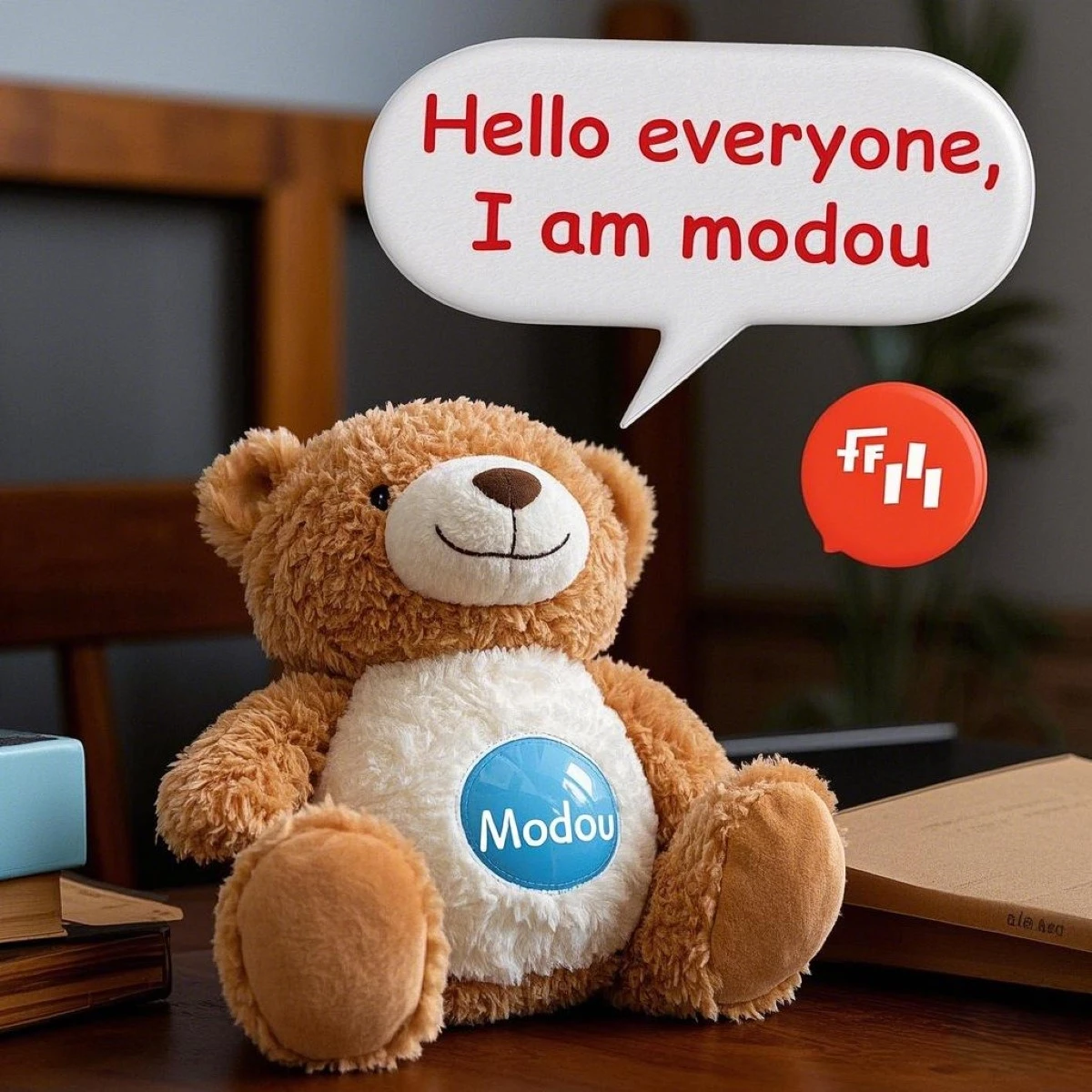
In recent years, intelligent voice interaction technology has gradually penetrated into the toy market, bringing unprecedented innovation and change. At present, many toys are using intelligent voice interaction technology on the market. They can not only recognize children's simple voice commands, but also conduct interactive conversations, and even tell stories or teach knowledge. For example, the intelligent voice pet of Modou technology can understand children's questions through the built-in voice recognition module and answer questions with a vivid and interesting voice; some educational toys use voice interaction technology to guide children to learn, such as helping children memorize words or mathematical formulas through questions and answers.
A notable feature of these intelligent voice interaction toys is their high interactivity. Traditional toys usually only provide limited functions, while intelligent voice interaction toys can adjust content and gameplay in real-time according to children's interests and needs. For example, toys such as Intelligent Robotics for Kids and Kids Robot Toys Without Touch Screen can answer children's questions, allowing children to make discoveries every time they ask questions. This highly customized interactive experience greatly enhances the appeal of toys and stimulates children's curiosity and desire to explore.
In addition, this type of toy also places special emphasis on safety and privacy protection. Because it involves children's use, manufacturers pay special attention to ensuring the safe transmission and storage of data when designing to avoid personal information leakage. At the same time, many toys are equipped with parental control functions, allowing parents to monitor and manage their children's use to ensure that children enjoy the fun of technology in a healthy and safe environment.
In general, intelligent voice interaction technology has given toys a new vitality, making them not only a simple entertainment tool but also an important partner for children's learning and growth. With the continuous advancement of technology and the further expansion of the market, it is expected that more creative and educational intelligent voice interaction toys will appear on the market in the future, continuing to lead the development trend of the children's toy industry.
Voice Interaction Toy Market
In recent years, with the maturity and popularization of intelligent voice interaction technology, the voice interaction toy market has ushered in a period of rapid development. According to statistics, the global voice interactive toy market has shown a steady upward trend since 2019. It is expected that by the end of 2025, the annual growth rate of the market will reach about 15% to 20%, and the total value is expected to exceed billions of dollars. This growth momentum is due to the increasing acceptance of smart products by consumers and the increasing attention parents pay to their children's early education.
In terms of market demand, modern families are increasingly inclined to choose toys that can both entertain and educate their children. Voice interactive toys meet the dual needs of parents and children with their unique interactivity and educational nature. Especially for preschool children, learning and playing with voice interactive toys can not only stimulate their imagination and creativity but also effectively promote the development of language skills. Therefore, this type of toy has been widely welcomed in the market.
In terms of competition, there are both traditional toy manufacturers actively introducing intelligent voice interaction technology to launch new products in the current market, and emerging companies focusing on the field of artificial intelligence have joined the battle. Among them, the participation of some well-known brands is particularly eye-catching. For example, LEGO has launched a new series of building blocks that combines AR technology and voice interaction functions, which not only retains the classic gameplay but also adds modern interactive elements; Mattel has released several Barbie dolls equipped with Amazon Alexa voice assistant, allowing children to have real conversations with them.
However, despite the promising market prospects, it is not easy to stand out in the fierce competition. Companies need to continue to innovate and develop products with unique selling points, while also paying attention to product quality and user experience. In addition, price is also a factor that cannot be ignored. Although high-end products often have more advanced technology and richer functions, for most families, more cost-effective products may be more attractive. Therefore, how to reduce costs while ensuring technological innovation has become a common challenge faced by all companies. Modou Technology is supplying a large number of cost-effective voice toys through an efficient supply chain management system.
Problems faced by the development of voice interactive toys
Although the voice interactive toy market has broad prospects, it also faces a series of challenges in the process of development. First, technical limitations are one of the most prominent problems at present. Although voice recognition and natural language processing technologies have made great progress, the accuracy of voice recognition still needs to be further improved in complex environments (such as home environments with large background noise). In addition, children of different ages have different language expression abilities and vocabulary, which requires toys to have highly flexible voice recognition capabilities so that they can understand and respond to various levels of voice input.
Secondly, privacy protection is also a major problem that cannot be ignored. Since voice interactive toys need to collect and process users' voice data, this has raised concerns about data security and personal privacy protection. Especially for toys used by children, parents pay more attention to their data security. Any data leakage incident may have a serious impact on the reputation of the company and lead to a crisis of trust among consumers. To this end, manufacturers must adopt strict encryption measures and technical means to ensure the safe transmission and storage of user data.
Finally, the lag in laws and regulations also restricts the healthy development of the industry. At present, the laws and regulations for voice interactive toys are not perfect, especially in terms of data privacy protection and children's rights protection. The lack of clear legal norms can easily lead to market chaos and affect the long-term stable development of the industry. Therefore, it is urgent to formulate and improve relevant laws and regulations to provide a clear guiding framework for the development of the industry.
Development trend of voice interactive toys
Looking to the future, voice interactive toys will usher in important development trends in multiple dimensions such as technological innovation, personalized services, and cross-platform integration. First of all, at the technical level, with the continuous advancement of artificial intelligence and machine learning technologies, the capabilities of speech recognition and natural language processing will be further enhanced, which means that toys will be able to understand and respond to children's words more accurately and maintain efficient operation even in complex environments. In addition, the development of emotional computing technology will enable toys to not only understand words but also "read" children's emotional state, thereby providing a more intimate and personalized interactive experience.
Personalized services will become another highlight of the development of voice interactive toys in the future. Through big data analysis and user behavior tracking, toys can customize content and services based on each child's interests, learning progress, and daily habits. For example, a learning toy based on voice interaction can automatically adjust the teaching difficulty according to the child's learning progress, or recommend story books suitable for their age and interests. This personalized learning experience can not only improve children's participation but also effectively support their all-round development.
Cross-platform integration is also an important development direction in the future. In the future, voice interactive toys will no longer be limited to a single usage scenario, but can be seamlessly connected with other smart devices, such as smartphones, tablets, and even smart home systems. Such integration can not only enrich the functions of toys but also create a full range of smart living environments so that children can enjoy continuous interactive experiences whether at home or away. For example, an intelligent voice doll can be a child's learning companion at home, and become a portable entertainment partner when going out, providing companionship and support anytime, anywhere.
In summary, voice interactive toys will become more intelligent, personalized, and multifunctional in the future. With the continuous advancement of technology and the deepening of society's attention to children's education, we have reason to believe that voice interactive toys will continue to play an important role in improving children's intelligence, emotions, and social skills, and bring children a more colorful growth experience.