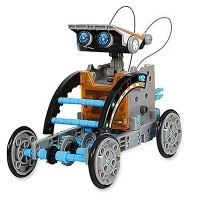
In today's rapidly developing technological era, artificial intelligence (AI) technology is constantly innovating every aspect of our lives. In particular, generative AI, as a technology that can create content autonomously, has shown great potential in many fields. The application range of generative AI is extremely wide, from text, images, to music creation, and personalized recommendation systems. Applying this cutting-edge technology to the toy manufacturing industry, especially the development of smart toys with voice interaction functions, not only provides children with a new way of entertainment, but also brings new educational tools to parents and educators. This article aims to explore the combination of generative artificial intelligence and voice-interactive toys, analyze its core technical principles, application scenarios, and future development trends.

What is Generative AI?
Definition and Basic Concepts
Generative AI refers to a class of computer programs based on machine learning algorithms that can generate new data that is somewhat similar to the original dataset used for training. In short, generative AI allows machines to "learn" to create or synthesize human-like works, such as articles, paintings, music, etc. This technology relies on specific models in the deep learning framework, such as generative adversarial networks (GANs), variational autoencoders (VAEs), and transformers. Through large amounts of data training, these models can recognize and imitate the basic patterns of data to generate creative new works.
How it works
The working mechanism of generative AI usually includes two main stages: learning and generation. First, in the learning stage, the model receives a large amount of input data and tries to extract key features and patterns from it. This process involves complex mathematical operations and statistical methods to ensure that the model can accurately understand the essence of the data. Next, in the generation stage, the trained model will create new data instances based on what it has learned. For text generation, this means generating a natural language text; for image generation, it may be a realistic picture. The charm of generative AI is that it is not limited to simple copy and paste, but can be innovative to a certain extent, producing content that is both meaningful and novel.
The main types of generative AI
- Generative adversarial networks (GANs): It consists of a generative network and a discriminative network. The generative network is responsible for creating data samples, while the discriminative network tries to distinguish between real data and generated data. The two compete and evolve together, which eventually enables the generative network to produce data that is very close to the real thing.
- Variational Autoencoders (VAEs): These models learn the probability distribution of data through an encoding-decoding structure to generate new data samples. Compared with GANs, VAEs are easier to train, but the quality of generation is sometimes slightly inferior.
- Transformers: In recent years, with the success of models such as BERT and GPT series, transformers have become the mainstream architecture for processing sequence data. They are particularly suitable for text generation tasks because they can better capture long-distance dependencies.
Generative AI and Voice Interaction
The Importance of Voice Interaction
In the digital age, the transformation of human-computer interfaces has promoted the development of voice interaction technology. Voice, as one of the most direct and natural ways of communication, allows people to easily interact with devices without manual operation. This is especially suitable for people who are not proficient in using keyboards or touch screens, such as children or the elderly. In addition, voice interaction can also provide a more personalized user experience because it can be customized based on factors such as the user's voice characteristics and speaking habits. Therefore, integrating voice interaction capabilities into toys can not only enhance the fun of toys but also promote children's language development and social interaction skills.
How Generative AI Achieves Voice Interaction?
To make toys with voice interaction functions, generative AI needs to be combined with technologies such as speech recognition and speech synthesis. Specifically, when users speak commands or ask questions to toys, the built-in speech recognition system converts the sound signal into text information. Then, the generative AI model generates corresponding answers or executes instructions based on the received text content. Finally, speech synthesis technology is used to convert the generated answers back into speech form and output them to the user. Throughout the process, generative AI plays a core role, which determines whether the toy's answers are reasonable, interesting, and creative. At the same time, to improve the realism and fluency of the interactive experience, it is also necessary to optimize the accuracy of speech recognition and the naturalness of speech synthesis.
Technical Challenges and Solutions
Although applying generative AI to voice-interactive toys sounds very attractive, there are still many technical challenges in the actual development process. The first is the issue of data privacy. Since toys may collect users' voice information, strict security measures must be taken to protect personal information from being leaked. The second is the real-time response speed of the model.
Considering that children have limited patience, any delay may lead to a bad experience. For this reason, developers usually choose lightweight models and run some computing tasks on local devices to reduce the delay caused by network transmission. In addition, how to ensure that the generated content is healthy and positive is also an important issue, especially in the design of products for children, inappropriate or harmful information should be avoided.
Typical application case analysis
Intelligent dialogue robot toys
Some companies have launched intelligent dialogue robot toys with built-in generative AI. These products can not only understand children's simple instructions, but also have interesting conversations. For example, robots such as Modou Technology's Intelligent Voice Dialogue Robot and Intelligent Voice-controlled Police Robot can tell stories, answer scientific questions and even conduct simple game interactions based on children's interests and hobbies. This type of toy can not only stimulate children's curiosity, but also help cultivate their logical thinking ability and language expression ability.
Educational voice interaction toys
Application in the field of education is also an important direction of generative AI and voice interaction technology. Many new learning toys are beginning to use generative AI to provide personalized teaching content. For example, learning toys such as Kids Robot Toys Without Touch Screen and Intelligent Robotics for Kids can help children practice pronunciation, memorize words and sentence structures through voice interaction. These toys are usually equipped with a rich library of educational resources and dynamically adjust the difficulty level with the help of generative AI to ensure that every child can get the most suitable learning experience for themselves.
Entertainment and companionship toys
In addition to educational purposes, there are many toys that focus on entertainment and emotional companionship functions. For example, the AI intelligent voice pet plush toy of Modou Technology has a built-in voice assistant that can play music, tell stories or chat with the owner to relieve boredom. Such toys are often designed to be very cute and easy to attract children's love in appearance, while the generative AI inside them gives them more lively personality traits, making them loyal friends of children.
Conclusion
In summary, generative artificial intelligence has opened up a new path for the innovative development of voice-interactive toys. By combining advanced speech recognition, speech synthesis technology, and powerful content generation capabilities, modern toys have not only become more intelligent and interesting but also subtly promote children's cognitive growth and social skills development. However, as technology advances, we should also pay attention to related ethical and safety issues to ensure that all products can maximize their value while protecting the rights and interests of users. In the future, with more research investment and technological breakthroughs, I believe we will witness more amazing innovations and further enrich our life experience.