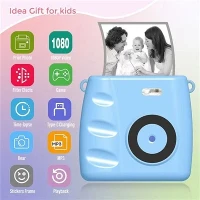
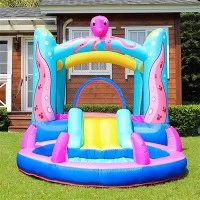
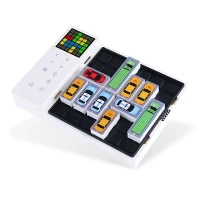
The main purpose of educational toys is to promote the development of children's cognitive, emotional, and social abilities through games, and to combine education with entertainment. However, many educational toys are designed with too much emphasis on educational functions. They always think from the perspective of adults that educational toys are beneficial to the development of children's brains, and the gameplay is boring and brain-consuming, ignoring the entertainment, which leads to children's unwillingness to play or stop playing after a while. Although parents think it is good for their children, children lack interest and lose the purpose and meaning of buying educational toys. How to make educational toys both educational and fun has become an urgent problem to be solved.
Common problems of educational toys
1. Lack of fun
The design of many educational toys is too simple, lacking in fun and interactivity, and cannot attract children's attention. For example, although traditional jigsaw puzzles and magnetic Huarongdao can exercise children's hands-on ability and spatial perception ability, the design is too simple or repetitive, and children can easily lose interest.
2. Age mismatch
The design of many educational toys often does not fully consider the age characteristics and cognitive level of children, resulting in toys that are too difficult or too easy. For example, the magnetic Huarongdao has a high level of difficulty, which will make young children under the age of 6 feel frustrated, while traditional building block toys with too low difficulty cannot stimulate children's interest.
3. Lack of emotional connection
Some educational toys lack emotional connection and cannot arouse children's emotional resonance. For example, although some early education robot toys can teach knowledge, they lack a story background or character settings. It is difficult for children to have emotional investment, and it is difficult for them to spend time playing with the toys, and the purpose of exercising thinking logic cannot be achieved.
How to make educational toys more fun
For educational toys to truly promote the development of children's cognitive, emotional and social abilities, it is necessary to develop toy products that meet the needs of children at different ages according to the development characteristics of children at different ages, so that children can truly participate in the functions set by the toys, such as exercising logical thinking and hand-eye coordination. Therefore, toy manufacturers should consider multiple angles such as interactivity, diverse play methods, storytelling and situationalization, visual and auditory stimulation, and parent-child interaction, and develop more playable educational toys.
|
Age stage
|
Development characteristics |
Toy requirements |
| 0-1 years old | Perception and the gross motor development period |
Bright colors, chewable, and sound-making requirements
|
| 1-3 years old | Language explosion period, fine motor development |
Training observation and logical thinking
|
| 3-6 years old | Logical thinking and creativity develop rapidly when stimulated |
spatial imagination and creativity
|
| 6 years old and above | Abstract thinking and strategic planning ability |
improvement Cultivate logical reasoning and strategic thinking
|
1. Increase interactivity
Design educational toys with high interactivity to allow children to actively participate in the process of playing. For example, the AI smart voice pet toy of Modou Technology can interact with children through dialogue and games to increase their sense of participation and interest.
2. Diversify the ways of playing
Provide educational toys with multiple ways of playing to keep children interested and encourage them to explore different ways of playing. For example, Rainbow Castle Building Blocks Toy, Magnetic Pieces Pipe Toy, etc., can create countless possible structures through different combinations and building methods.
3. Storytelling and contextualization
Design educational toys into characters with story backgrounds or contexts to stimulate children's imagination. For example, the role-playing toys of Fengshen use the Chinese mythology and legend Fengshenbang as the storyline, allowing children to use superb strategies to defeat opponents in the process of playing roles, thereby gaining a sense of accomplishment and successfully promoting thinking training.
4. Visual and auditory stimulation
Use bright colors, interesting graphics, and pleasant music to attract children's visual and auditory attention. For example, educational toys such as Remote Control Spray Stunt Car and Drift Stunt Car increase the fun and attractiveness of toys through sound effects and spray effects.
5. Parent-child interaction
Design educational toys suitable for parents and children to play together to enhance parent-child interaction and emotional connection. For example, Popokill Smart Chessboard Puzzle Game Console toys can be completed by parents and children together to enhance parent-child relationships.
Conclusion
To make educational toys both educational and fun, it is necessary to work hard on interactivity, diversified gameplay, storytelling and situationalization, visual and auditory stimulation, and parent-child interaction. Through continuous innovation and improvement, educational toys will play a more important role in the growth of children, and also bring new growth opportunities to the toy market.
In short, the future development of educational toys will be diversified, intelligent, and sustainable. By deeply understanding the needs and interests of children, designing toys that are both educational and fun can not only promote the all-around development of children, but also allow parents and children to enjoy the fun of playing together.