Injection molding demolding is a key step in the plastic injection molding process. It refers to the process of removing the finished product from the mold after the plastic product is cooled and solidified. This process not only affects the final quality of the product, but is also directly related to production efficiency and cost control. The principle of injection molding demolding is based on the design and operation technology of the mold. Usually, a certain force is applied by mechanical or hydraulic devices to separate the finished product from the mold cavity.
Specifically, the operation methods of injection molding demolding mainly include manual demolding and automated demolding. Manual demolding is suitable for the manufacture of small and low-volume products. The operation is relatively simple but the labor intensity is high, and it is easy to cause unstable product quality due to human factors. Automated demolding is widely used in large-scale production, and an efficient and stable demolding process is achieved through precise control systems and automated equipment. Common automated demolding methods include ejector type, push plate type and pneumatic clamps, which can effectively reduce manual intervention, improve production efficiency, and ensure product consistency.
The quality of injection molding demolding is crucial to the final product. First of all, a good demolding effect can ensure that the surface of the finished product is smooth and flawless, avoiding defects such as scratches and scratches. Secondly, appropriate demolding force can prevent deformation and breakage caused by excessive stretching or extrusion, thereby improving the overall quality and durability of the product. In addition, efficient demolding design can significantly shorten the production cycle, reduce the scrap rate, and further optimize the production process.
In short, as an important part of plastic injection molding, the precision and stability of injection molding operation directly affect the appearance and performance of the product. Through reasonable design and technical means, not only can product quality be improved, but also production efficiency can be greatly improved, bringing considerable economic benefits to the enterprise.
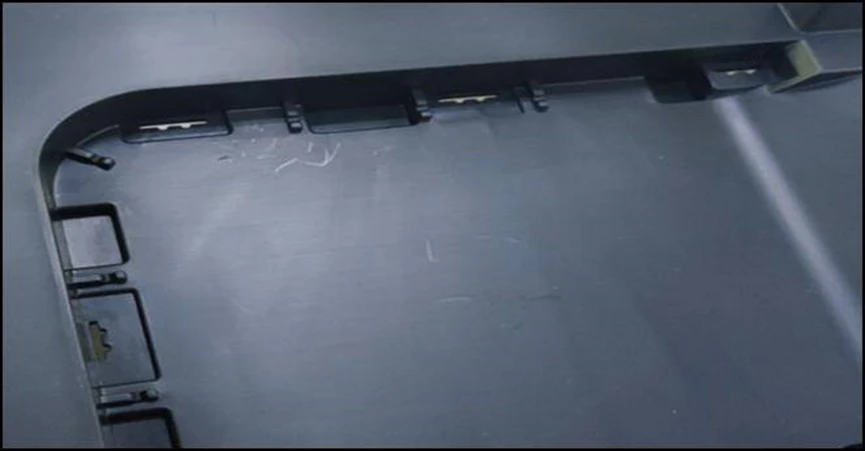
Why does drafting cause scratches and scrapes?
During the injection molding demolding process, scratches and scrapes are common quality problems, which seriously affect the appearance and market competitiveness of the product. These defects are mainly caused by mold design, material selection, and operating technology. First of all, improper mold design is one of the main causes of scratches and scratches. If the inner wall of the mold is not smooth enough or there are sharp edges, the friction will increase when the finished product is pushed out, which is very likely to cause surface damage. In addition, factors such as unreasonable gate position and unscientific runner layout may also cause problems of uneven filling or uneven cooling, thereby increasing the risk of surface defects.
Secondly, the selection of raw materials has an important impact on the surface quality of the finished product. Different types of plastic materials have different fluidity and shrinkage characteristics. Under high temperature and high pressure, some materials may be more prone to adhesion, resulting in difficulty in demolding, which in turn causes scratches and scratches. For example, materials such as high molecular weight polyethylene (HMWPE) and polycarbonate (PC) are more prone to surface defects during the injection molding process due to their high viscosity and toughness. Therefore, choosing the right raw materials is crucial to reducing surface damage.
Operating technology is also one of the key factors affecting the surface quality of the finished product. During the injection molding process, if the temperature is not properly controlled, the plastic melt will have poor fluidity, increasing the friction with the inner wall of the mold, resulting in scratches. In addition, too high or too low injection pressure will affect the demolding effect of the finished product. Too high pressure will make the finished product fit tightly to the mold and difficult to remove smoothly; on the contrary, too low pressure may lead to insufficient filling, leaving gaps or depressions, which will also affect the surface quality. Therefore, precise control of injection molding temperature and pressure is an important means to ensure the smooth surface of the finished product.
In addition to the above factors, the use of release agents also deserves special attention. Although release agents can reduce the friction between the finished product and the mold to a certain extent, if they are not selected or used properly, they will aggravate surface damage. For example, some release agents may decompose under high temperature conditions, forming harmful substances deposited on the inner wall of the mold, resulting in rough surfaces of the finished products produced subsequently. In addition, uneven coating of release agents can also increase local friction and increase the risk of scratches and scrapes.
How to Reduce Scratches and Scratches: Mold Design Optimization
In order to effectively reduce the scratches and scrapes generated during the injection molding demolding process, optimizing the mold design is a vital first step. First of all, the selection and application of mold surface treatment technology is crucial to improving the surface quality of the finished product. Common mold surface treatment methods include polishing, electroplating, sandblasting and coating. Polishing is the most basic treatment method. Through fine grinding, the mold surface can achieve a mirror effect, reduce the friction with the plastic melt, and thus reduce the risk of scratches and scratches. However, the polished mold needs regular maintenance to maintain its surface smoothness. Electroplating technology enhances the surface hardness and corrosion resistance by covering the mold surface with a layer of wear-resistant material such as chromium or nickel, which can effectively reduce surface damage while extending the service life of the mold. Sandblasting sprays fine particles at high speed to hit the mold surface, forming tiny pits, thereby increasing friction, helping the plastic melt to better fill the mold cavity and reduce defects caused by uneven filling. Coating technology is an advanced processing method that has developed rapidly in recent years. By coating special materials such as PVD (physical vapor deposition) or CVD (chemical vapor deposition) on the mold surface, the mold surface is given excellent wear resistance and self-lubricating properties, which greatly reduces the friction between the finished product and the mold, and reduces the possibility of scratches and scratches.
Secondly, reasonable gate design is also indispensable for reducing surface damage. The gate is not only the main channel for the plastic melt to enter the mold, but also one of the key factors affecting the quality of the finished product. The following aspects should be considered to optimize the gate design: First, the location of the gate. The ideal gate location should be as far away from the key parts of the finished product as possible to avoid affecting the appearance due to residual traces of the gate. Second, the size of the gate. Too large or too small will affect the filling effect. Too large a gate may cause overflow, while too small a gate may cause problems such as insufficient filling or bubbles. Third, the type of gate. According to the shape and requirements of the product, choosing a suitable gate type, such as a point gate, side gate or latent gate, can effectively reduce surface defects. In particular, the latent gate, due to its strong concealment, can minimize the gate marks and improve the appearance of the finished product.
Runner design is also an important aspect of mold design optimization. As the part connecting the gate and the mold cavity, the design of the runner directly affects the flow characteristics and filling effect of the plastic melt. The following principles should be followed to optimize the runner design: First, the selection of the runner cross-sectional shape. Common runner cross-sectional shapes include circular, trapezoidal and semicircular, among which the circular cross-sectional shape is often preferred due to its smaller friction resistance and better filling effect. Second, the matching of runner length and diameter. A runner length that is too long or a diameter that is too small will increase the flow resistance, resulting in uneven filling or uneven cooling, thereby increasing the risk of surface damage. Third, the rationality of the runner layout. A reasonable runner layout should ensure that the plastic melt can be evenly distributed to each cavity to avoid local stress concentration or insufficient filling. Through the above measures, the runner design can be effectively improved and the scratches and scratches generated during the injection molding demolding process can be reduced.
In short, optimizing mold design is an effective way to reduce scratches and scratches during the injection molding demolding process. By adopting advanced mold surface treatment technology, optimizing gate design and runner layout, the surface quality of the finished product can be significantly improved to meet the market demand for high-quality products.
How to Reduce Scratches and Scratches: Material Selection and Improvement
In the process of injection molding demolding, in addition to optimizing mold design, selecting and improving raw materials is also one of the key strategies to reduce scratches and scrapes. First of all, it is crucial to select materials suitable for the injection molding process. Different types of plastic materials have differences in fluidity and shrinkage characteristics, which directly affect the surface quality and demolding difficulty of the finished product. For example, materials such as polypropylene (PP) and polyethylene (PE) have low viscosity and good fluidity, which are easy to fill the mold cavity, but their shrinkage rate is high, which may cause deformation or uneven surface of the finished product. In contrast, although materials such as polycarbonate (PC) and polyoxymethylene (POM) have low shrinkage, their high viscosity increases the friction with the inner wall of the mold, which is prone to scratches and scratches. Therefore, selecting the right material according to product requirements can reduce surface defects at the source.
In addition, adding additives is also one of the effective means to improve material properties. Common additives include lubricants, antioxidants, toughening agents and pigments. Lubricants can form a thin protective film between the plastic melt and the inner wall of the mold, reduce the friction coefficient between the two, and reduce the occurrence of scratches and scratches. Commonly used lubricants include zinc stearate, silicone oil and paraffin, which can not only improve the demoulding effect, but also improve the surface gloss of the finished product. Antioxidants are mainly used to prevent plastics from oxidative degradation at high temperatures, extend the service life of the material, and indirectly improve the surface finish of the finished product. Tougheners can enhance the toughness of the material, reduce the risk of cracking of the finished product during demoulding, and ensure surface integrity. Although pigments are mainly used to change the color of the finished product, their dispersion will also affect the smoothness of the finished product surface. Therefore, selecting high-quality pigments and optimizing their dispersion process are also important links to reduce surface defects.
Finally, the pretreatment process cannot be ignored to ensure the best state of the material. Before injection molding, proper pretreatment of the raw materials can significantly improve their processing performance. Common pretreatment methods include drying, heating and mixing. Drying is a key step to remove moisture from the raw materials, especially when using hygroscopic materials such as nylon (PA) and polyamide (PBT). The presence of moisture not only affects the fluidity of the plastic melt, but also produces bubbles and cracks during the injection molding process, resulting in surface defects of the finished product. Heating treatment preheats the raw materials to achieve the best flow state, thereby reducing friction with the inner wall of the mold and improving the demolding effect. Mixing is to fully mix a variety of raw materials or additives to ensure that the components can play the best synergistic effect during the injection molding process and improve the overall quality of the finished product. Therefore, selecting and improving raw materials is an important measure to reduce scratches and scratches during injection molding and demolding. By selecting suitable plastic materials, adding various additives reasonably, and implementing effective pretreatment processes, the surface quality of the finished product can be significantly improved to meet the market demand for high-quality products.
How to Reduce Scratches and Scratches: Operating Technique Improvements
In order to further reduce the scratches and scrapes generated during the injection molding demolding process, optimizing the operating technology is an indispensable link. First of all, precise control of injection temperature and pressure is the key. The injection temperature directly affects the fluidity of the plastic melt and its friction with the inner wall of the mold. Too high or too low temperature may lead to uneven filling or difficult demolding. The ideal injection temperature should be within the optimal processing range of the material to ensure that the melt has good fluidity and minimal adhesion. At the same time, the injection pressure must also be strictly controlled. Too high pressure will make the finished product close to the mold, increase the difficulty of demolding and the risk of surface damage; on the contrary, too low pressure may lead to insufficient filling and the formation of voids or shrinkage holes. Therefore, by real-time monitoring and adjusting the temperature and pressure parameters of the injection molding machine, surface defects can be significantly reduced. The plastic parts of Modou Technology's Modou Flip Clock Timer, Smart Stunt Dog, Intelligent Voice Dialogue Robot and other products have continuously optimized the operating technology during the production process to ensure the appearance of the product.
Secondly, the correct use of release agent is also an effective means to reduce scratches and scrapes. The role of the release agent is to form a protective film between the mold and the finished product, reduce friction, and facilitate the smooth demolding of the finished product. However, there are many types of release agents, each with its own scope of application and characteristics. Generally speaking, water-based release agents are environmentally friendly and easy to clean, but have poor durability; oil-based release agents have better lubrication effects, but may contaminate the mold and affect subsequent production. Choosing the right type of release agent and diluting and spraying it in the correct proportion is the premise to ensure its effectiveness. In addition, it is also important to evenly apply the release agent to avoid local concentrations that are too high or too low, resulting in inconsistent surfaces.
Furthermore, mold cleaning and maintenance are essential to maintaining the surface finish of the finished product. During long-term use, the mold will inevitably accumulate dirt, carbides, and even residues. These impurities not only affect the quality of the finished product, but also increase the difficulty of demolding. Regularly cleaning the mold to remove dust and residues can effectively prevent surface damage. Common cleaning methods include physical wiping, ultrasonic cleaning, and chemical solvent immersion. In addition, timely repair of minor damage on the mold, such as burrs, cracks or worn parts, can also significantly reduce the occurrence of scratches and scrapes. Keeping the mold in good condition not only improves the quality of the finished product, but also extends the service life of the mold.
Finally, the use of an automated demoulding system can further improve production efficiency and finished product quality. In modern injection molding production lines, more and more companies are beginning to introduce automated equipment, such as robot arms, automatic ejector systems, and intelligent detection devices. These devices achieve a highly automated demoulding process through precise control systems and sensor feedback, reducing errors caused by human intervention. For example, the robot arm can accurately grasp and carry the finished product, avoiding bumps and scratches that may be caused by manual operation; the automatic ejector system controls the action sequence and strength of the ejector through a preset program to ensure that the finished product is smoothly separated from the mold and reduce surface damage. The intelligent detection device can monitor the surface condition of the finished product in real time during the demoulding process, detect and correct potential problems in a timely manner, and further improve the overall quality of the product.
In summary, by precisely controlling the injection molding temperature and pressure, using mold release agents correctly, strengthening mold cleaning and maintenance, and introducing an automated demolding system, the scratches and scratches generated during the injection molding demolding process can be significantly reduced, and the surface quality and market competitiveness of the finished product can be improved. These measures not only improve production efficiency, but also lay a solid foundation for the sustainable development of the enterprise.