Mold materials refer to the raw materials used to manufacture various molds. These materials must have good mechanical properties, thermal stability and wear resistance to ensure that the mold maintains high precision and high efficiency during long-term use. Specifically, ideal mold materials should have the following key characteristics:
1. High strength and hardness: The mold needs to withstand high temperature and high pressure as well as repeated mechanical stress during the production process, so the material must have sufficient strength and hardness to prevent deformation or damage.
2. Good wear resistance: Especially in plastic injection molding, there is continuous friction between the mold and the plastic melt, which requires the material to have excellent wear resistance to extend the mold life and ensure product quality.
3. Excellent thermal stability: During the injection molding process, the mold will undergo frequent heating and cooling cycles. Good thermal stability can ensure the stability of the mold size and avoid deformation caused by temperature changes.
4. Easy processing: In order to achieve complex mold design, the material must be easy to perform precision processing operations such as cutting and drilling, thereby improving production efficiency and reducing costs.
5. Corrosion resistance: Some plastic raw materials contain corrosive components or produce chemical reactions under certain conditions, so mold materials also need to have a certain degree of corrosion resistance.
Common mold materials mainly include tool steel (such as P20, H13), stainless steel, aluminum alloy and copper alloy. Each material has its own unique advantages and disadvantages and is suitable for different application scenarios. For example, tool steel is widely used in the manufacture of various complex molds due to its excellent comprehensive performance; stainless steel is particularly suitable for mold manufacturing of food-grade or medical-grade products due to its excellent corrosion resistance and surface finish; although aluminum alloy has a lower hardness, it is often used in rapid prototyping or cost-sensitive applications due to its light weight and good thermal conductivity.
In short, choosing the right mold material is one of the key factors to ensure mold quality and production efficiency. Different types of mold materials have their own characteristics, and it is crucial to select the most suitable material according to specific production needs and product characteristics.
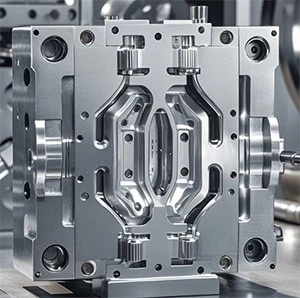
The influence of mold materials on plastic toy molds and injection molding
The selection of mold materials has a profound impact on plastic toy molds and their injection molding process. First of all, from the perspective of mold durability and life, high-quality mold materials can significantly improve the wear resistance of molds. During the injection molding process, the inside of the mold is in constant contact with the plastic melt, especially when using some plastics with high viscosity or containing fillers, this wear is particularly obvious. If the mold material is not strong or wear-resistant enough, it will cause the mold surface to wear quickly, affecting the quality and appearance of the finished product, and increasing the cost of repair and replacement. On the contrary, using mold materials with high hardness and high wear resistance, such as H13 tool steel, can effectively extend the service life of the mold and reduce the frequency of maintenance.
Secondly, the thermal stability of the mold material directly affects the stability of the injection molding process and the quality of the product. During the injection molding process, the mold needs to withstand multiple heating and cooling cycles. If the thermal stability of the material is poor, it may cause the mold to deform slightly or change in size, which in turn affects the accuracy and consistency of the finished product. For example, when the mold is slightly deformed, it may cause the gate position to shift, causing problems such as uneven filling or flow marks. In addition, the thermal conductivity of the material is also very important. Good thermal conductivity helps to speed up the cooling speed, shorten the production cycle, and improve production efficiency. For example, aluminum alloys are often used in situations where rapid cooling is required due to their excellent thermal conductivity, but their hardness is relatively low and their scope of application is limited.
Furthermore, the processing difficulty of the mold material is directly related to the mold manufacturing cost and cycle. Some high-performance mold materials, such as cemented carbide, although they have extremely high hardness and wear resistance, are very difficult to process and require the use of specialized equipment and technology, which undoubtedly increases the manufacturing cost and time. In contrast, P20 tool steel not only has good mechanical properties, but is also easy to process, making it the preferred material for many plastic product molds. By selecting appropriate mold materials, the production process can be optimized and the manufacturing cost can be reduced while ensuring quality.
Finally, the choice of mold material will also affect the surface quality and aesthetics of the injection molded product. High-quality mold materials usually have a smoother surface treatment effect, making the finished product surface smoother and flawless. For example, a mold surface that has been finely polished or electroplated can significantly reduce scratches and bubbles on the surface of the finished product and improve the overall texture of the product. At the same time, some special materials also have self-lubricating properties, which further reduces the friction between the finished product and the mold and reduces the surface damage that may occur during demolding.
In short, the choice of mold material has an important impact on the durability of plastic toy molds, the stability of the injection molding process, the manufacturing cost, and the quality of the final product. Reasonable selection and application of mold materials can not only improve product quality, but also greatly improve production efficiency, bringing significant economic benefits to enterprises.
What kind of mold material should be selected for plastic toys
For plastic toy manufacturing, choosing the right mold material is crucial because it directly affects the safety, durability and production cost of the toy. Considering that plastic toys are usually aimed at the children's market, safety and environmental protection are the primary considerations. Therefore, when choosing mold materials, it is necessary not only to pay attention to its mechanical properties and thermal stability, but also to consider whether it meets the relevant safety standards.
First, it is recommended to use steel with good mechanical properties and wear resistance as the main mold material. Common choices include P20 and H13 tool steels. P20 tool steel is widely used in mold manufacturing for general plastic toys due to its excellent processing performance and moderate price. It is not only easy to process, but also has good wear resistance and moderate hardness, which can meet the needs of most toy production. H13 tool steel is more high-end, and its higher hardness and wear resistance make it particularly suitable for manufacturing toy molds that require high precision and durability, such as building blocks or dolls with complex shapes.
Second, for toys that require higher surface finish and corrosion resistance, stainless steel materials can be selected. Stainless steel not only has excellent corrosion resistance, but also has good surface treatment effect, which can provide a smoother and brighter finished surface, which is especially important for toys that require high gloss. For example, the molds of Smart Pet Robotic Cat, Spray Cop Robot, Intelligent Voice-controlled Police Robot, Remote Control Spray Stunt Car and other products of Modou Technology are made of high-quality stainless steel materials, which ensures the smooth and bright appearance of the products. However, stainless steel is relatively expensive and difficult to process, so it is more suitable for high-end toy manufacturing with extremely high requirements for surface quality and safety.
In addition, considering some special needs that may exist in the production of plastic toys, such as rapid prototyping or low-cost mass production, aluminum alloy is also a viable option. Although aluminum alloy is not as hard and wear-resistant as steel, it is light and has good thermal conductivity, which is very suitable for molds that require rapid cooling, helping to shorten the production cycle and improve production efficiency. In addition, the cost of aluminum alloy molds is relatively low, which is suitable for small toy manufacturers with limited budgets.
Finally, for some special-purpose toys, such as toys that require highly transparent or soft materials, special mold materials or coating technologies may be required to meet specific needs. For example, silicone molds are often used to make soft plastic toys because of their flexibility and good demolding performance; while ceramic molds can be used to make transparent or translucent plastic toys, providing better optical effects.
In summary, the selection of plastic toy mold materials should take into account a variety of factors, including but not limited to mechanical properties, wear resistance, thermal stability, surface treatment effects, and cost-effectiveness. For most conventional plastic toys, P20 tool steel is an affordable and reliable choice; for high-end or special-demand toys, H13 tool steel, stainless steel or other special materials can be selected according to specific circumstances. Through scientific and reasonable material selection, not only can the quality and safety of toys be improved, but also the production cost can be effectively controlled and the market competitiveness can be enhanced.