The mold sprue, also known as the gate or feed port, is the channel connecting the injection molding machine nozzle and the mold cavity during the plastic injection molding process. Its main function is to guide the molten plastic from the injection molding machine into the mold to ensure that the plastic can evenly and efficiently fill the entire mold cavity. The design of the mold sprue directly affects the quality, production efficiency and cost control of the product.
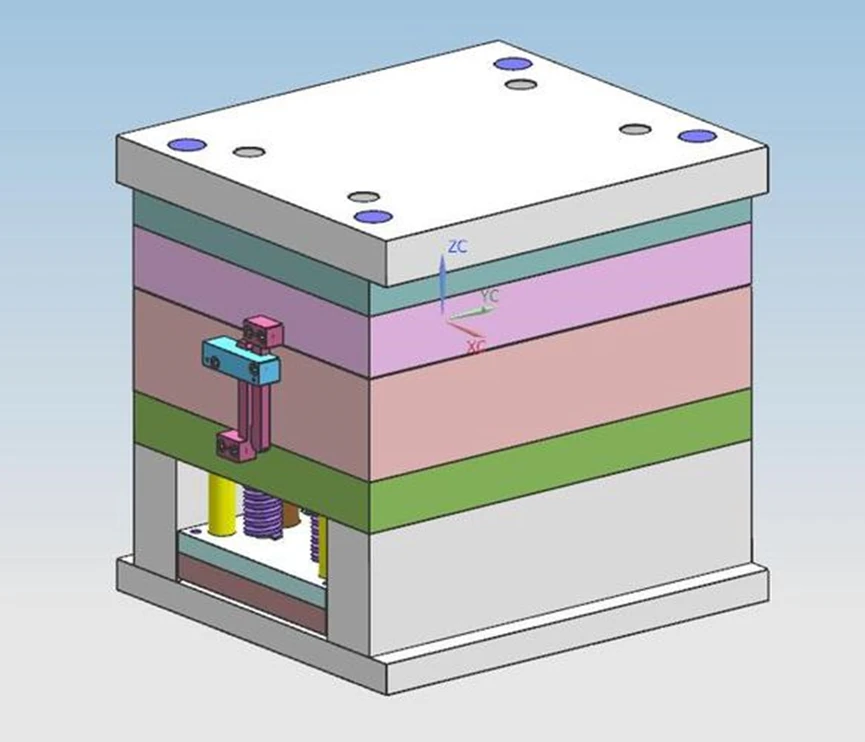
In the manufacturing process, the role of the sprue is crucial. First, it determines the speed and pressure distribution of the plastic melt flowing into the mold, which directly affects the surface quality and internal structure of the final product. Secondly, a reasonable sprue design can effectively reduce the scrap rate and improve production efficiency. By optimizing the position and size of the sprue, common defects such as bubbles, flow marks, and shrinkage can be avoided, thereby improving the consistency and reliability of the product.
In addition, the sprue also affects the cooling time and demolding process. A good sprue design helps to speed up the cooling speed, shorten the production cycle, and facilitate the smooth demolding of the finished product. In short, the mold sprue is not only the gateway for plastic injection into the mold, but also one of the key factors to ensure product quality and production efficiency.
The process of nozzle formation
The process of forming the sprue is an important part of the plastic injection molding process, involving multiple steps and technical details. First, in the design stage, engineers need to select the appropriate sprue type and location according to the specific requirements of the product. Common sprue types include straight-through sprues, side gates, point gates, latent gates, etc. Each type of sprue has its scope of application and advantages and disadvantages. For example, straight-through sprues are suitable for products with simple shapes, while point gates are more suitable for products with complex or high-precision requirements.
Next is the mold manufacturing stage, in which precision machining technology plays a vital role. In order to ensure that the sprue can accurately guide the plastic melt into the mold cavity, it must be processed using advanced CNC machines (CNC) to achieve high-precision dimensional control. In addition, the choice of mold material must also be considered. Steels with good wear resistance and high thermal stability, such as P20 or H13 steel, are usually selected to ensure the stability and durability of the mold during long-term use.
In actual operation, the plastic melt is heated to a specific temperature through the screw of the injection molding machine and then injected into the mold by high pressure. At this time, the sprue, as the main channel for the melt to enter the mold, must not only withstand high temperature and high pressure, but also have good fluidity to quickly fill the mold cavity. To achieve this goal, a special flow channel design is sometimes set at the sprue, such as streamlined or gradient diameter, to reduce the melt flow resistance and prevent the occurrence of retention.
Finally, when the plastic is completely solidified and cooled, the finished product needs to be separated from the sprue by a certain method. This usually involves post-processing processes such as mechanical cutting or laser cutting to ensure that the edges of the finished product are smooth and burr-free. It can be seen that the formation of the sprue not only depends on the early design planning, but also on precise manufacturing technology and efficient production process management.
The influence of sprue on toys
The sprue plays a vital role in the toy manufacturing process, and has a profound impact on its appearance, quality and safety. First of all, from the perspective of appearance, the location and design of the sprue directly determine the beauty of the finished product surface. If the sprue is improperly located or designed unreasonably, it may cause obvious seam marks, flow marks or shrinkage marks, which will seriously affect the overall appearance of the toy. Especially in the high-end market, consumers have extremely high requirements for the appearance of toys, and any defects may cause the product to lose competitiveness. Therefore, designers need to carefully consider the location of the sprue, try to hide it in an inconspicuous place, or use a detachable sprue design so that these marks can be removed in subsequent processing.
Secondly, the sprue has a significant impact on the quality of the toy. High-quality sprue design can ensure that the plastic melt evenly fills the mold cavity and avoids product defects such as bubbles and voids caused by insufficient filling. In addition, a reasonable sprue design can also reduce internal stress and improve the strength and durability of the toy. Especially in children's toys, due to the high frequency of use, the toy needs to have sufficient impact resistance and durability. If the sprue design is poor, it may cause breakage or other quality problems, increasing the return rate and complaint rate of the product.
In terms of safety, the sprue should not be ignored. For toys used by children, safety is always the primary consideration. Unqualified sprue design may result in residual sharp corners or protrusions, which may cut children's skin. Therefore, during the design and manufacturing process, relevant safety standards must be strictly followed to ensure that all sprues are properly trimmed and smoothed. In addition, for some special types of toys, such as assembly toys with small parts, special attention should be paid to whether the sprue will cause small parts to loosen and fall off, thus becoming a risk source for swallowing dangerous objects.
In short, the importance of sprues in toy manufacturing cannot be underestimated. Whether it is the pursuit of perfect appearance effects or the guarantee of product quality and safety, the sprue needs to be carefully designed and processed. Only in this way can we ensure that the final product is both beautiful and practical, and meets various strict safety regulations.
Different nozzle types and their applications
In the field of plastic injection molding, different types of gates have their own characteristics and are suitable for the needs of different scenarios. The first is the straight-through gate, which is the simplest and most direct type and is suitable for the production of products with relatively regular shapes and uniform wall thickness. However, its main disadvantage is that it is easy to leave obvious gate marks, affecting the appearance of the product, so it is mostly used in the manufacture of industrial parts with low requirements for appearance.
Side gate is another widely used form, especially suitable for situations where the gate position needs to be concealed. Side gate can effectively reduce gate marks and improve the appearance quality of the product. At the same time, it can better control the flow direction of the plastic melt and reduce bubbles and shrinkage. However, the production process of side gate is relatively complicated, requiring a high level of technology and fine mold design, so the cost is relatively high.
Point gate is known for its small inlet size and is often used to produce complex structural parts with high precision requirements. The advantage of point gate is that it can achieve rapid filling and cooling, reduce molding time, and minimize gate marks and improve product appearance. However, this type of gate has extremely high requirements for equipment and molds, especially for the precision and sealing of the mold. There are very strict standards, and the maintenance cost is also increased accordingly.
The latent gate combines the advantages of the side gate and the point gate, has good concealment and small gate marks, and is widely used in the manufacture of consumer products with strict requirements on appearance. The latent gate can achieve uniform material filling without affecting the overall aesthetics of the product, and is very suitable for the production of high-end toys and other consumer electronic products. However, its design and manufacturing are difficult, and it is necessary to consider a variety of factors, including the gate position, runner layout, and the design of the cooling system.
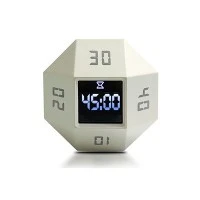
Each type of gate has its own advantages, and the choice of which form should be based on specific application requirements and product characteristics. For example, in the manufacture of various types of toys such as Popokill Smart Chessboard Puzzle Game Console, Modou Flip Clock Timer, and Electronic Handy Piano, in order to meet the dual standards of beauty and safety, latent or point gates are selected. Although they are more expensive, they can provide better user experience and higher market competitiveness. For some simple industrial components, more economical straight-through or side gate solutions can be selected.
Importance and strategies of optimizing nozzle design
Optimizing the design of mold gates is of great significance for improving production efficiency and reducing production costs.
First of all, reasonable gate design can significantly improve production efficiency. By optimizing the position and size of the gate, a faster and more uniform filling process can be achieved, and the filling time and cooling time can be reduced, thereby increasing the output per unit time. In addition, a good gate design can also reduce the occurrence of undesirable phenomena such as overflow and flash, further shorten the time for cleaning and maintenance, and improve the overall operation efficiency of the production line.
Secondly, optimizing the gate design helps to reduce costs. On the one hand, it reduces the defective rate caused by unreasonable design, reduces the waste of raw materials and rework costs; on the other hand, by improving the gate structure, the service life of the mold can be extended, and the frequency of mold replacement and repair can be reduced, thereby saving a lot of manpower and material resources. At the same time, reasonable gate design can also simplify subsequent processing steps, such as deburring and grinding, and reduce the man-hours and tool consumption required for these processes.
In order to achieve the above goals, the gate design can be optimized from the following aspects:
- Simulation analysis: Use computer-aided engineering (CAE) software to perform mold flow analysis, predict the flow behavior of plastic melt in the mold, evaluate potential problems and propose improvement plans. This method can find design defects before actual production and avoid unnecessary trial and error costs.
- Experimental verification: Through small-scale tests of different design schemes, data is collected and compared and analyzed to find the optimal solution. Although this method takes a long time, it provides real and reliable feedback information, which helps to make more scientific and reasonable decisions.
- Application of new materials: Explore the use of new mold materials or coating technologies to enhance the wear resistance and corrosion resistance of the mold surface, extend the service life, and reduce frequent replacement and maintenance caused by wear.
- Innovative design concept: Learn from the successful experience of other industries, introduce new design concepts and technical means, such as adaptive nozzles, intelligent adjustment systems, etc., and continuously improve the technical content and flexibility of nozzle design.
In summary, optimizing mold nozzle design can not only bring significant economic benefits, but also promote the development of enterprises to a higher level. Through scientific methods and continuous technological innovation, enterprises can occupy a favorable position in the fierce market competition and achieve the long-term goal of sustainable development.