Mold Cavity
The mold cavity is the part of the mold that directly molds the plastic product. It is usually composed of a male mold (the internal form of the molded product, a female mold (the external shape of the molded product), a core or a molding rod, an insert, etc. The mold cavity is composed of the movable mold and the fixed mold. In order to ensure that the surface of the plastic product is smooth and beautiful and easy to demold, the roughness of the cavity surface that contacts the plastic should generally be very small. The number of mold cavities is mainly determined based on the projected area, geometric shape (with or without side core pulling), product precision, batch size, and economic benefits of the product. After the number of mold cavities is determined, it is necessary to arrange the cavities and make a good layout of the cavity positions in the mold.
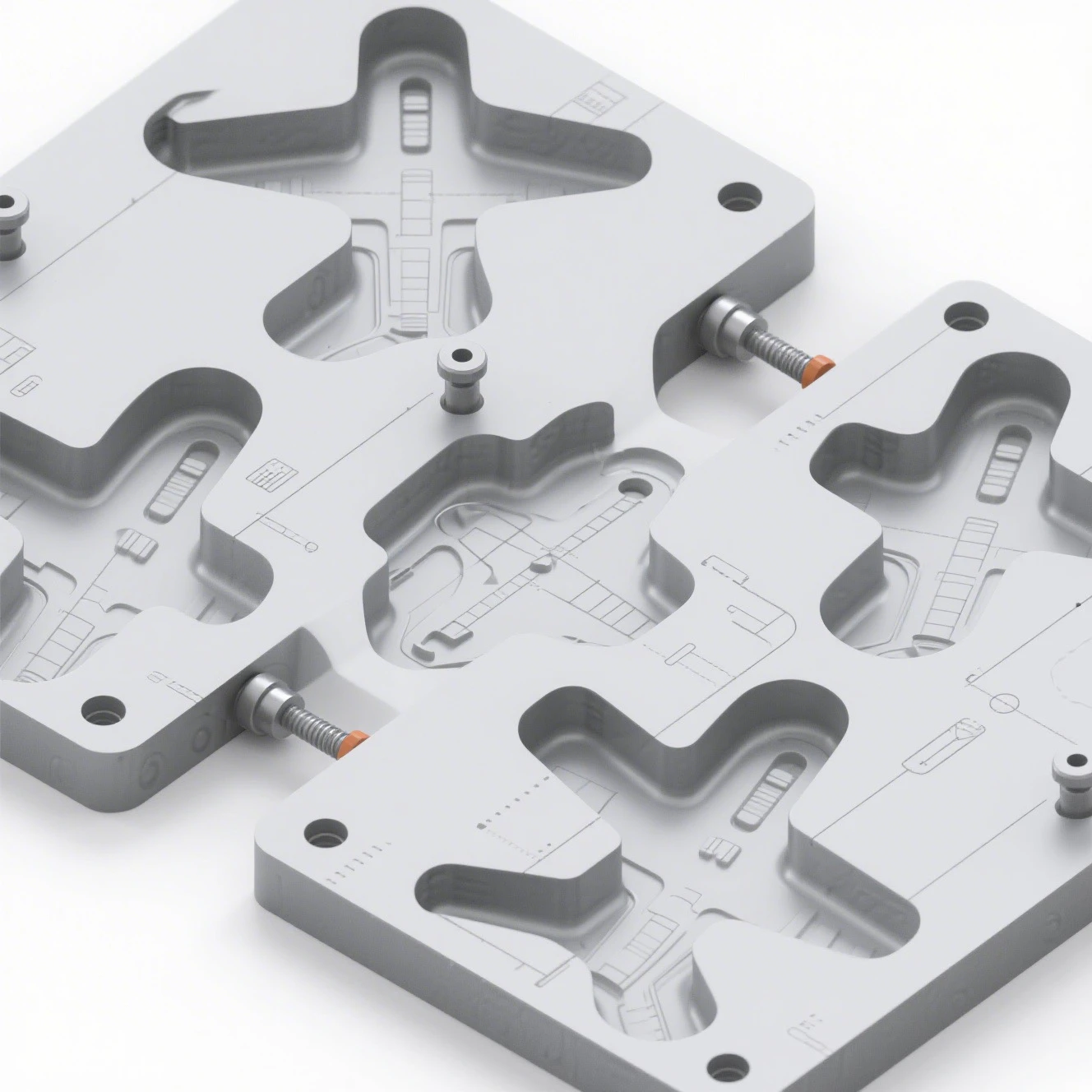
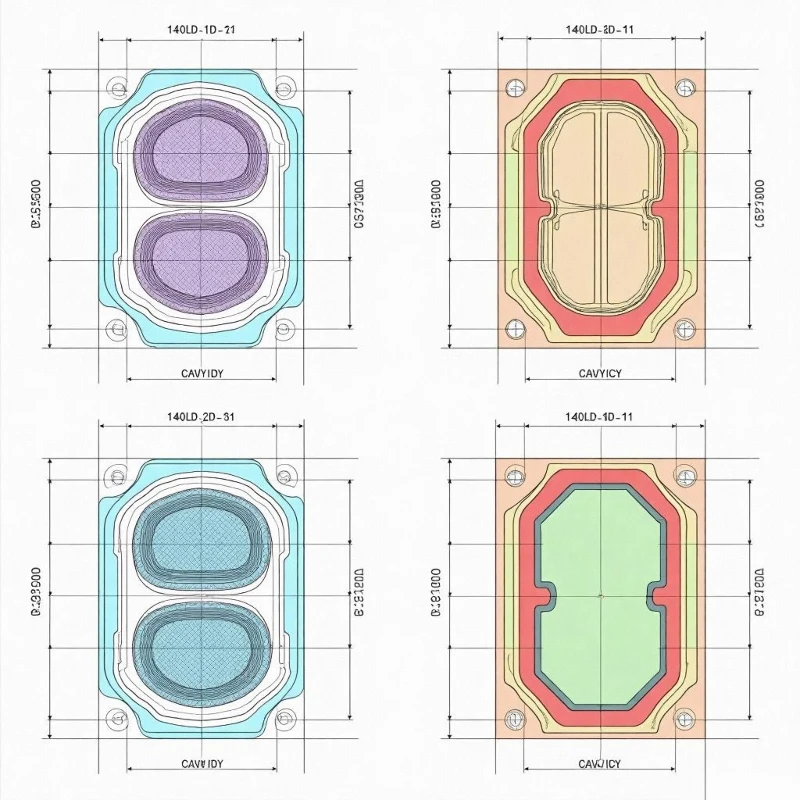
The influence of mold cavity number on toy quality
The number of mold cavities has many effects on product quality. This issue needs to be analyzed from multiple dimensions, including dimensional accuracy, appearance consistency, structural integrity, material properties, and production stability.
First of all, in terms of dimensional accuracy, the dimensional accuracy of the plastic part will decrease by 4%-5% for each additional cavity. This is because it is difficult for multi-cavity molds to ensure that the filling pressure, temperature, and speed of all cavities are completely consistent. For toy parts that require precise matching (such as building block structures), this decrease in accuracy may cause the components to fail to assemble normally. For high-precision toys, such as gears and building blocks, if 16-cavity molds are used for this type of toys, the size fluctuation of adjacent cavities may exceed 0.3mm, resulting in assembly difficulties or functional failure. In the continuous production process of multi-cavity molds, the uneven distribution of mold temperature in each cavity (the temperature difference can reach more than 10°C) will cause local thermal expansion differences, causing the toy to deform due to local expansion.
Secondly, regarding appearance consistency, as the number of cavities increases, the flow channel becomes longer, and the temperature of the melt front drops faster, it is easy to form obvious weld marks (such as the seams on the face of a doll) or flow marks on the surface of the toy, and the products between cavities will have differences in appearance. This is especially important for toys that focus on appearance (such as doll facial features), because differences in color, gloss or texture will affect the overall aesthetics of the product.
In terms of structural integrity, toys with complex structures are at higher risk in multi-cavity molds. Unbalanced filling of each cavity may result in insufficient weld mark strength or loose internal structure, affecting the durability and safety of the toy. For example, in a 32-cavity mold, the filling pressure of the end cavity may be only 60% of that of the first cavity, resulting in uneven wall thickness or easy fracture, causing the toy's structure to lose integrity.
Regarding material properties, different plastic materials have different adaptability to multiple cavities. High-flow materials (such as PP) are more suitable for multi-cavity molds than low-flow materials (such as PC). Low-flow materials such as PC have large flow resistance in molds with more than 16 cavities, and the injection pressure and temperature need to be increased, which may cause material degradation, such as brittle and yellowing of toys, which has an important impact on the material selection of toys.
In terms of production stability, multi-cavity molds have a higher failure rate. For each additional cavity, the risk of mold failure increases by 5%~10%. A problem with one cavity will cause the entire mold to shut down, affecting the production consistency of all products.
In toy mold design, how many cavities should be designed, whether to use a single cavity or multiple cavities, often requires comprehensive consideration of multiple factors. The following lists some comparisons between single-cavity molds and multi-cavity molds, which can be used as some references for selecting the number of toy cavities.
| Impact on dimensions | Single cavity mold | Multi-cavity mold |
| Dimensional accuracy | Error ≤±0.1mm, suitable for precision parts | The error can reach ±0.3mm, and the difference between multiple cavities is obvious |
| Appearance defects | No flash, shrinkage, clear details | Flash and lack of material are likely to occur, and the complex structure is unclear |
| Internal strength | Uniform density, strong drop resistance | Bubble may exist, and the tensile strength is reduced |
| Long-term stability | Slow mold wear, small quality fluctuation | The cavity wears unevenly, and frequent mold repair is required |
There is a "trade-off relationship" between the number of mold cavities and toy quality: single-cavity molds trade high costs for high quality and are suitable for precision, high-end toys; multi-cavity molds sacrifice some quality to improve efficiency and are suitable for mass toys that do not require high precision (such as ordinary plastic building blocks). In actual production, the appropriate number of cavities must be selected based on the toy positioning and material properties, and quality risks must be reduced through technical optimization.